How Postural Correction Can Eliminate Recurring Pain
June 8, 2026
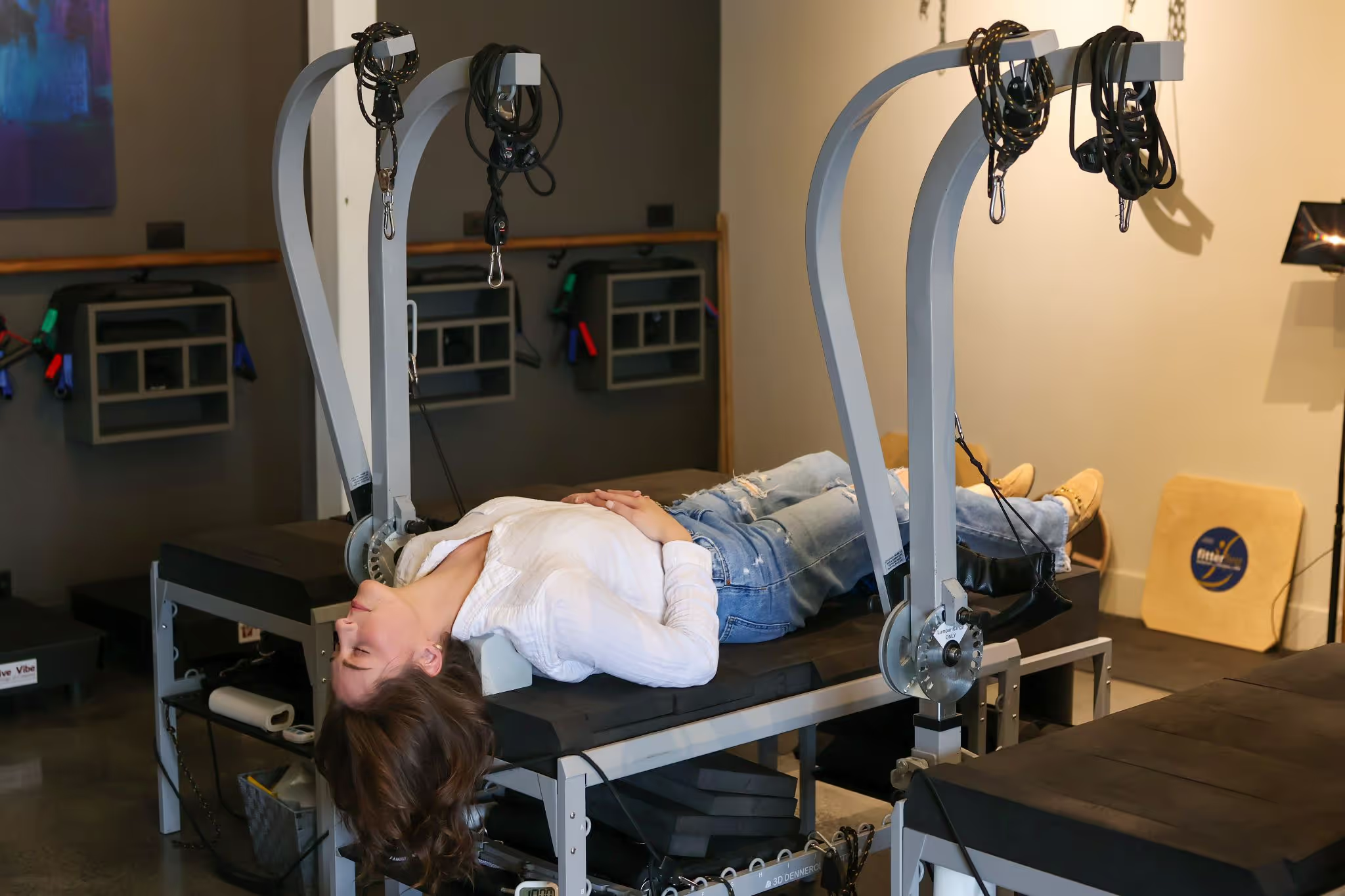
By the time many patients come into Thrive Wellness Center, they’ve already tried the stretching videos, massage guns, and better office chairs. But their neck tension and headaches keep coming back as a result of their posture, which causes strain on the upper back and neck.
Dr. Ben sees this constantly in people who spend hours at desks, in cars, or looking down at their phones. Over time, the head slowly shifts forward, and the muscles in the neck and upper back start working harder than they should.
After enough time, the body feels it. People start noticing burning between the shoulders, tightness that never fully relaxes, or pain that shows up halfway through the workday.
Research on Chiropractic BioPhysics® (CBP®) has shown that when alignment improves, pain levels often improve too. At Thrive Wellness Center, the goal is not just temporary relief. We want to understand why the pressure keeps coming back in the first place and, even more importantly, eliminate it.
Key Takeaways
- Poor posture can place extra strain on the neck, shoulders, and upper back over time.
- Forward head posture is one of the most common patterns linked to recurring tension and headaches.
- Temporary relief does not always fix the reason the pain keeps returning.
- Postural correction focuses on improving alignment, movement, and long-term support for the body.
- Daily habits like desk work, driving, and phone use can all affect posture more than people realize.
- Chiropractic adjustments, corrective exercises, and mobility work are often used together for better long-term improvement.
Common Pain Patterns Linked to Postural Issues
One of the most common posture problems treated at
Thrive Wellness Center is forward head posture. At first, you may not even notice it's happening. Then the headaches start. Shoulders start feeling tight. And, without even thinking about it, you’re rubbing the base of their neck halfway through the day.
As the head shifts farther in front of the shoulders, the muscles in the neck and upper back start carrying more strain just to support it. After enough time, the body starts feeling it in different ways:
- Burning between the shoulders
- Neck stiffness after sitting at a desk too long
- Frequent tension headaches
- Tightness that keeps coming back after stretching or massage
- Pain that feels worse by the end of the day
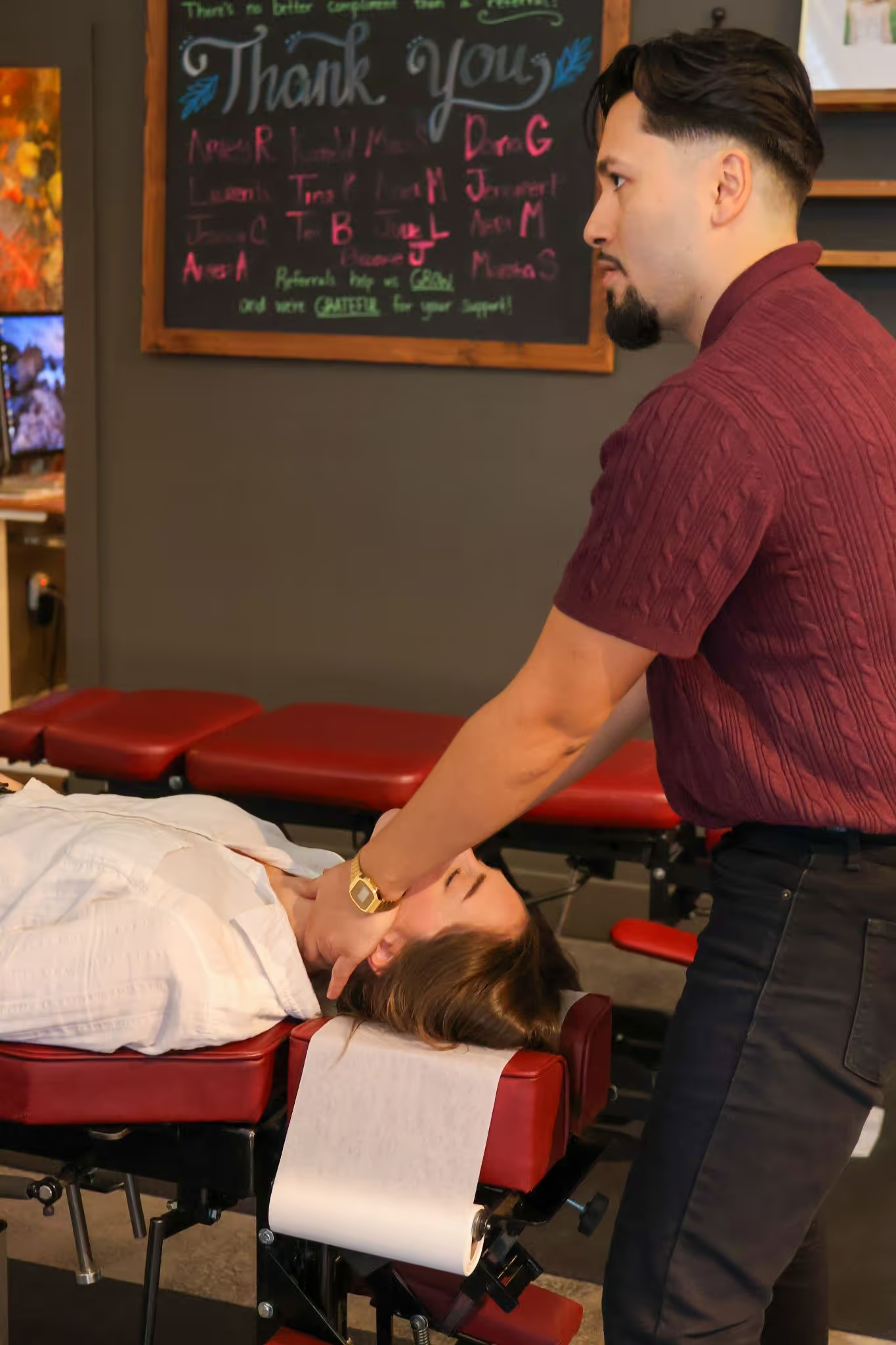
Image - A Thrive team member performing a chiropractic adjustment to help improve spinal alignment and support long-term postural correction.
A lot of patients are surprised when posture ends up being a bigger part of the problem than the thing they originally blamed.
And it does not always stop at the neck. Lower back pain, hip tension, and stiffness through the upper back often start building the same way. The body compensates for poor posture for so long that other areas start picking up the slack, too.
What Postural Correction Involves
Postural correction is about helping the body move without constantly overworking the same areas. When the spine stays out of alignment long enough, certain muscles start overworking while other areas become weak, tight, or stiff. That is why the tension keeps coming back even after stretching, massage, or short-term relief.
At Thrive, treatment usually combines chiropractic adjustments with corrective exercises that help the body hold better posture long term. Adjustments help restore movement in areas that have become restricted. The exercises help the body hold those changes instead of falling back into the same patterns between visits.
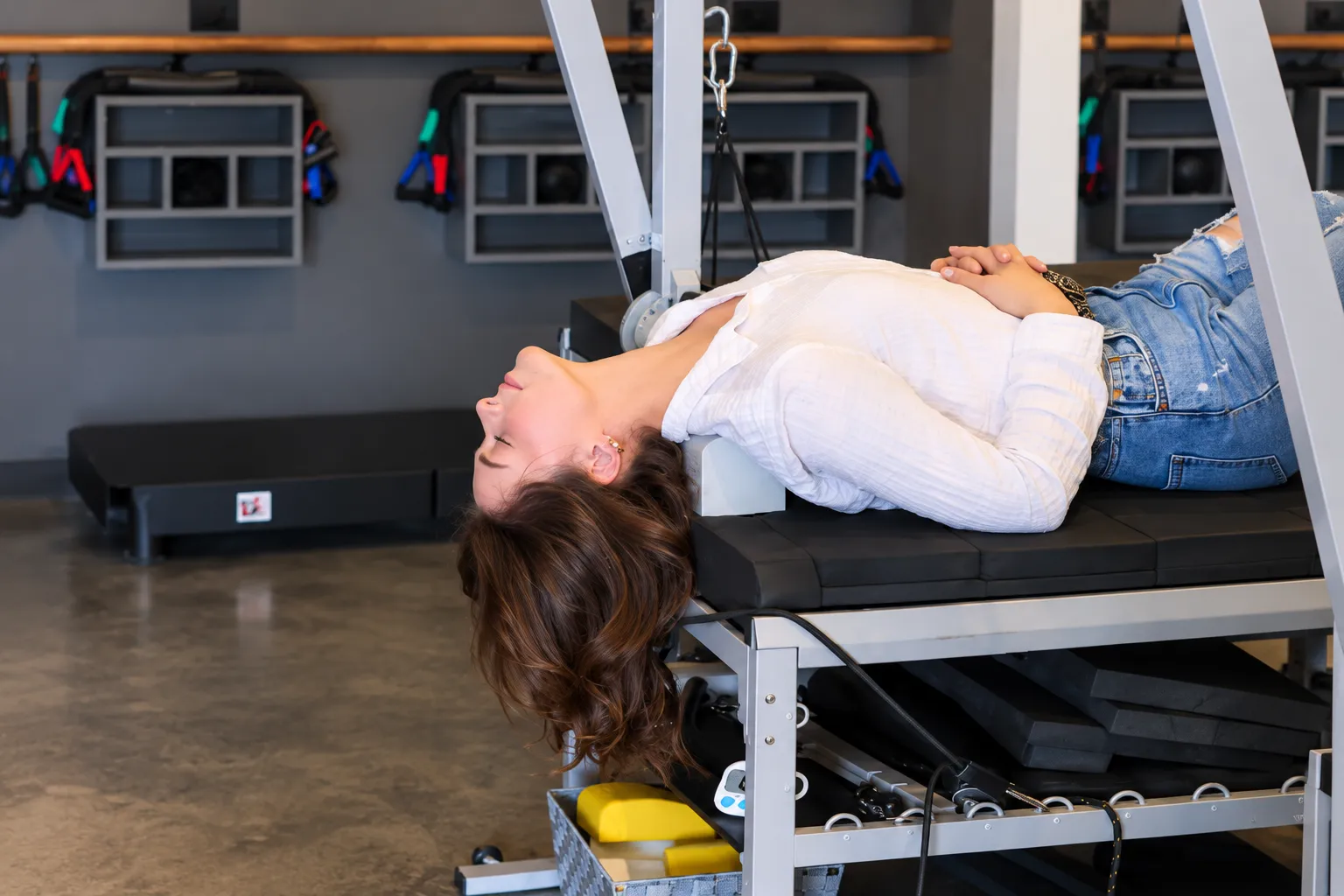
CBP® takes it a step further by using precise X-rays to measure alignment and track progress over time. Instead of guessing where the stress is coming from, the goal is to actually see what the spine is doing and gradually correct it.
How We Evaluate Posture
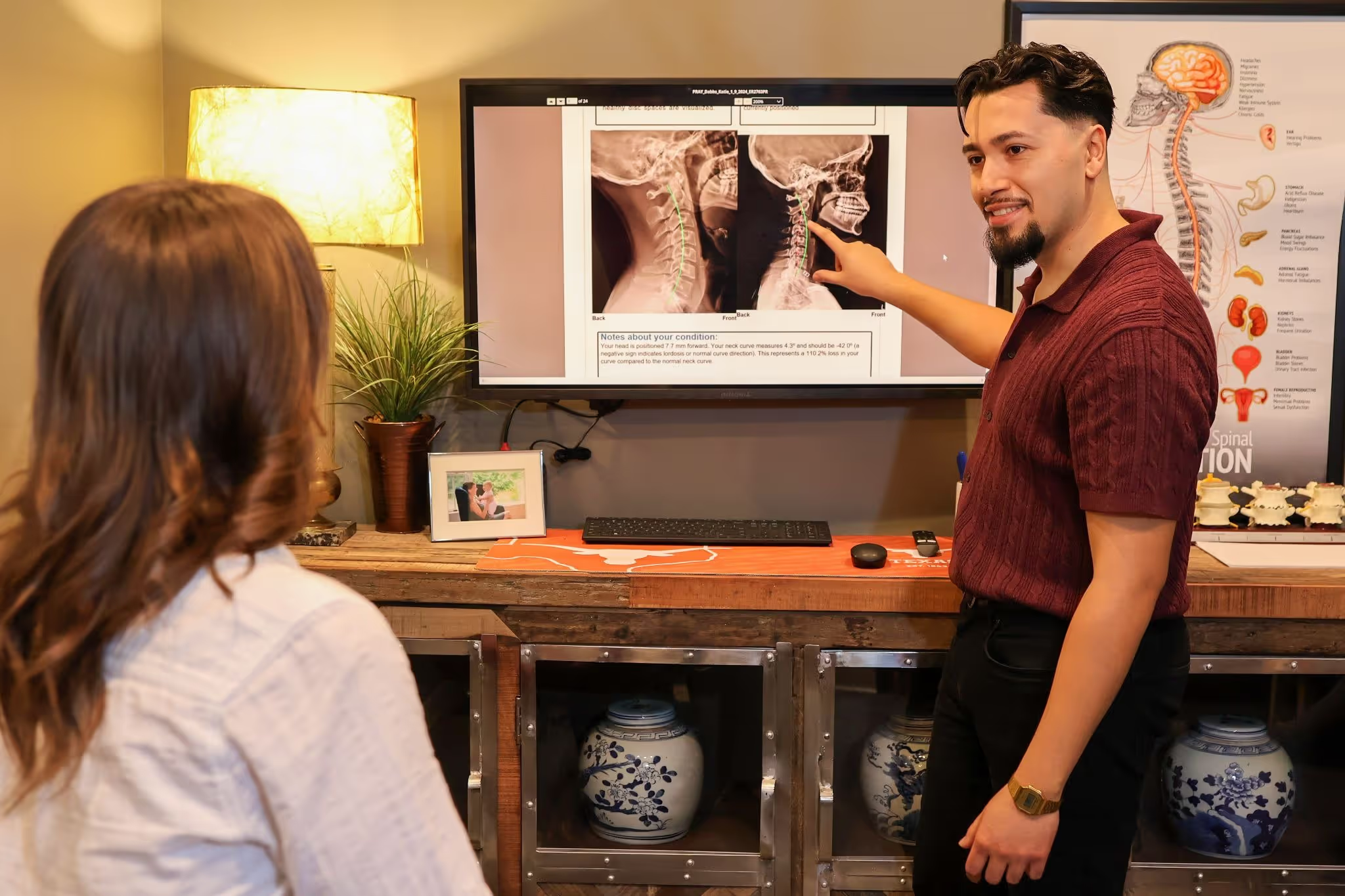
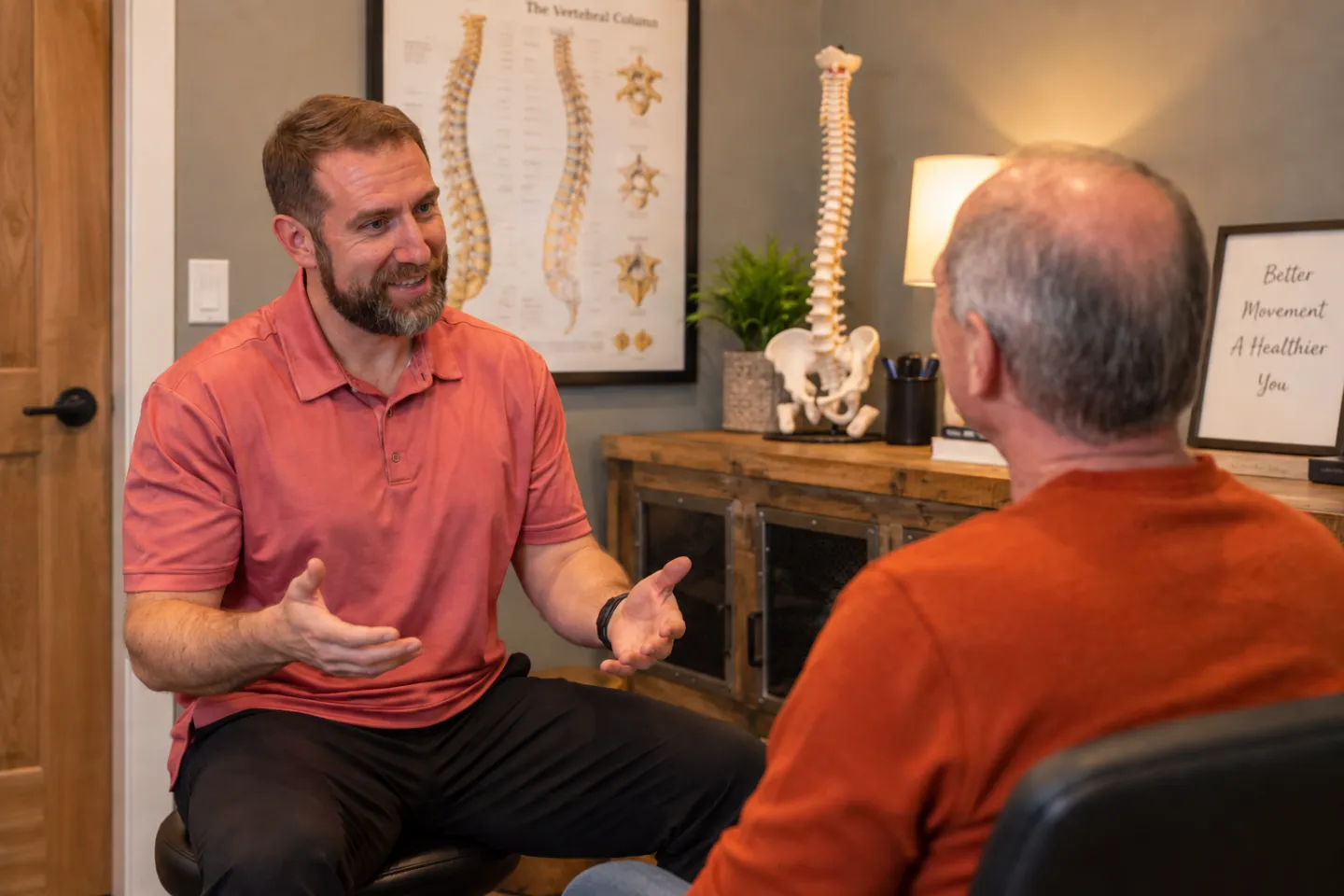
Image - A Thrive team member reviewing digital X-rays with a patient to evaluate spinal alignment and identify postural imbalances that may be contributing to pain.
- Stress Location: The first step is figuring out where the stress is actually coming from. That starts with looking at how the body naturally stands and moves. Rounded shoulders. Uneven hips. A head that sits too far forward.
- Medical Evaluation: From there, posture measurements and X-rays help show what is happening beneath the surface. Instead of guessing, we can look at spinal curves, alignment, and the areas carrying the most stress.
That helps us see what has been putting the most stress on the body and what may be keeping the pain going.
How Chiropractic Care Corrects Posture
Posture usually does not change overnight, and neither does the strain that comes with it. By the time many people come into Thrive Wellness Center, their bodies have already spent months or years compensating around tight muscles, restricted joints, and poor movement patterns.
Chiropractic adjustments help restore movement in areas that have stopped moving properly. That can take pressure off irritated joints and reduce some of the tension the body has been carrying day after day.
But adjustments are only part of it. Corrective exercises help strengthen the muscles responsible for supporting better posture, so the body does not keep falling back into the same patterns between visits.
Mobility work and stretching also help loosen areas that tighten up from hours of sitting, driving, or desk work. Sometimes the problem is not one big thing either. It can be the monitor sitting too low. The way someone leans while working. Even the position they spend most of the day in, without thinking about it.
Benefits of Postural Correction for Pain Relief
One of the first things people notice is less tension throughout the day. They are not constantly rolling their shoulders anymore. Their neck does not feel as heavy by the end of the workday. Sitting through a meeting or driving across town becomes less irritating.
Headaches and muscle tension usually start calming down, too. holding yourself upright does not feel as exhausting anymore. For some people, even sleep becomes more comfortable once the pressure through the neck and upper back starts improving.
One of our biggest goals at Thrive is to help patients break the cycle of temporary relief. In our experience, people who stay consistent with corrective care and home exercises usually see better long-term improvement than people constantly chasing short-term fixes.
Signs You May Need Postural Correction
Poor posture does not cause sudden, intense pain. In most cases, the tension and stiffness gradually become more noticeable over time, but unfortunately, people get used to the feeling of tension or daily headaches.
Some of the most common signs include:
- Neck or upper-back pain that keeps returning
- Burning or tightness between the shoulders
- Headaches that start later in the day
- Pain that feels worse after desk work or driving
- Constant stiffness, even after stretching
- Trouble sitting or standing comfortably for long periods
- Feeling like your posture collapses when you are not thinking about it
Frequently Asked Questions
What types of postural issues can chiropractic care address?
Chiropractic care can help with posture problems like forward head posture, rounded shoulders, and pelvic imbalance. Those patterns often lead to recurring neck pain, headaches, shoulder tension, and lower back discomfort because the body is constantly compensating for the stress.
At Thrive, the goal is not just getting joints moving again temporarily. We want to correct the reason the tension keeps coming back!
How often should I see a chiropractor for postural correction?
That depends on how long the posture problem has been there and how much the body has already spent months or years adapting around tight muscles. Some people notice changes fairly quickly, while others need more consistent corrective care over time.
Many patients start with more frequent visits in the beginning, then taper down as posture, movement, and symptoms improve. The goal is long-term improvement, not just feeling better for a day or two after an adjustment.
Can children benefit from postural correction?
Yes, especially during growth periods when posture habits are still developing. Heavy backpacks, long hours on devices, and inactivity can all start affecting the way a child sits, stands, and moves over time.
Early intervention can help catch those patterns before they become harder to correct later on. At Thrive, care is always adapted to the child’s age, comfort level, and stage of development.
What lifestyle changes can support postural correction?
The small things people do every day usually matter more than they realize. Hours at a desk, the way someone sits while working, or staying in the same position too long can keep adding stress to the body.
Getting up more often, moving throughout the day, and paying attention to workstation setup can make a bigger difference than most people expect.
Are there any risks associated with postural correction treatments?
When performed by a licensed chiropractor, postural correction is generally safe. Some people may experience temporary soreness after adjustments. If you have concerns, discuss them with your chiropractor so they can explain what to expect and how we'll minimize any risks.
How can I maintain good posture after treatment?
Posture habits usually do not change overnight. After years of sitting a certain way or carrying tension in the same areas, the body naturally falls back into familiar patterns.
That is why the small daily habits matter so much after treatment. Stretching. Movement. Corrective exercises. Even things like monitor height, desk setup, or getting up more often throughout the day can make a bigger difference than people realize.
You do not need perfect posture every second of the day. The goal is helping the body stop slipping back into the same patterns that kept creating tension and pain to begin with.
How quickly can postural correction relieve pain?
Some people start noticing changes within a few weeks. Headaches become less frequent. The neck does not feel as tight by the end of the day. Sitting and driving become more comfortable again.
Long-term posture problems usually take time to fully correct, though, especially when the body has been compensating around them for years. Consistency tends to make the biggest difference.
Can I do postural exercises at home?
Yes, and home exercises are usually a big part of improving posture long-term. The important thing is making sure the exercises actually target the right areas. A lot of people end up stretching muscles that are already overworked while ignoring the areas that need more support.
Our corrective exercises are tailored to the specific posture pattern someone is dealing with.
Are ergonomic adjustments necessary?
Usually, yes. If the body keeps spending 8 or 9 hours a day in the same stressful position, it becomes much harder to hold onto the progress made during treatment.
Sometimes the changes are small. Monitor height. Chair setup. The position someone works in every day. But those habits can either support better posture or keep pulling the body back into the same tension patterns.
Is chiropractic care safe for postural correction?
Yes. Chiropractic care is generally very safe when performed by a licensed professional. Some people feel mild soreness at first, especially when the body starts moving differently again, but that usually settles quickly.
At Thrive Wellness Center, care is personalized based on the patient, their posture patterns, and how their body responds throughout treatment.
Improve Your Posture
A lot of people spend years chasing temporary relief without realizing how much posture is contributing to the problem. The headaches keep coming back. The neck tension returns. Stretching helps for a few hours, then everything tightens right back up again.
At Thrive, the approach is about figuring out why the stress keeps building in the first place. Through Chiropractic BioPhysics® (CBP®), chiropractic adjustments, mobility work, and corrective exercises, treatment is designed to help the body move and function with less strain day after day.
If posture-related pain has been affecting your daily life, the first visit is $67 and includes a full exam and consultation. Sometimes people are surprised by how much of their discomfort connects back to the way their body has been compensating for years.

Dr. Ben Ozanne
Chiropractor and Owner of Thrive Wellness Center
Latest from the Blog
Inside a CBP Treatment Plan: What to Expect From Start to Finish
Wondering what a CBP treatment plan actually involves? See what happens from your first exam and X-rays through adjustments, mirror image traction, and follow-up imaging at Thrive Wellness Center in Fayetteville, AR.
How CBP Postural Correction Techniques Work (and Why They Matter)
Temporary relief from an adjustment doesn't always mean the underlying posture problem is corrected. Here's how CBP postural correction techniques work, what a first visit looks like, and why the approach is built to be measured over time.
Structural Correction vs. Traditional Adjustments: What's the Difference?
Traditional adjustments can restore movement and ease pain. Structural correction adds measurable spinal and postural findings you can track over time. Here is how the two approaches differ, and what progress looks like when it is measured instead of guessed at.