How CBP Postural Correction Techniques Work (and Why They Matter)
September 15, 2026
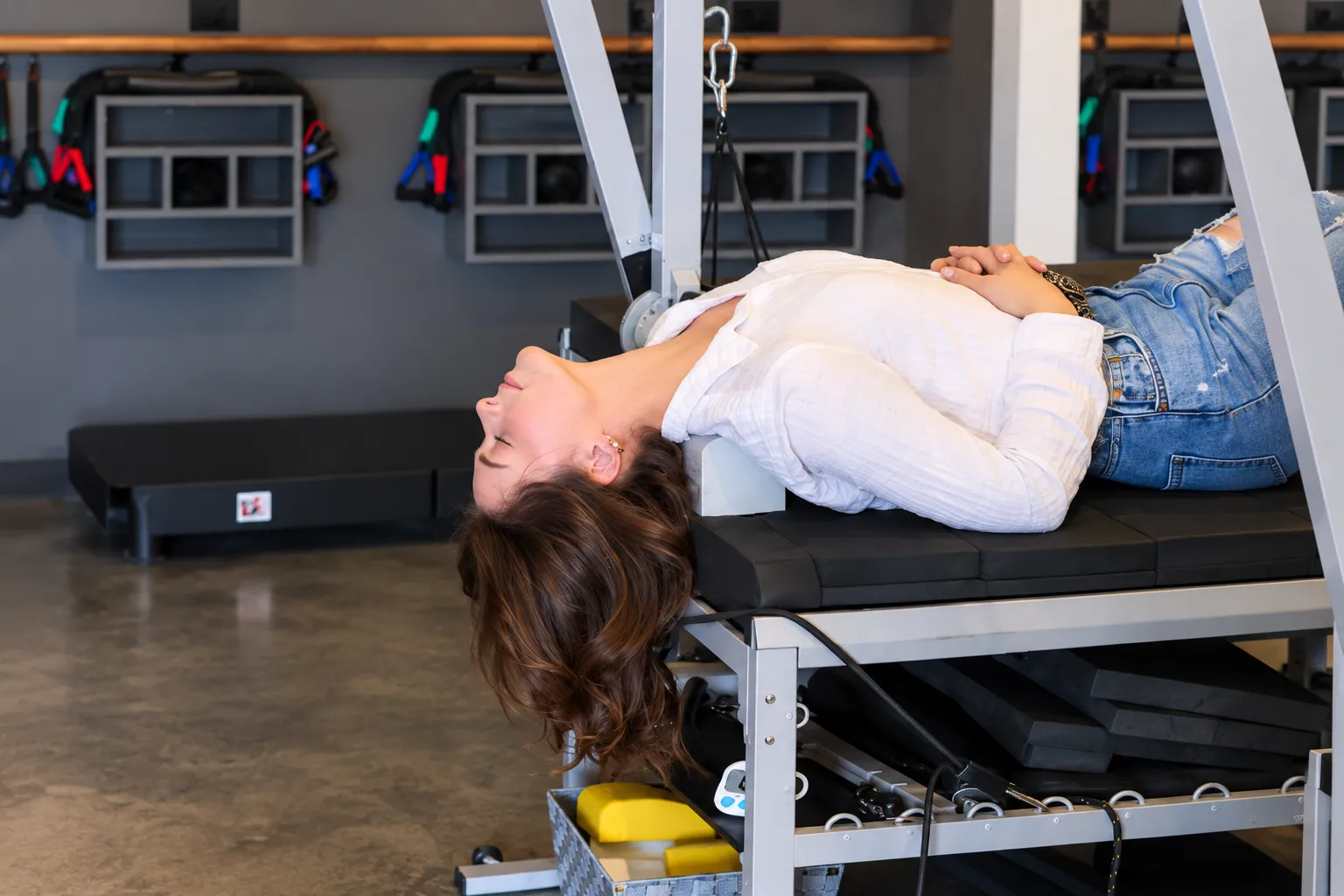
You get an adjustment because your neck or back is bothering you, and for a few days, you feel like yourself again. Then you sit at your desk for too long, take a long drive, or wake up the wrong way, and there it is again. And honestly, it can affect your whole day. Your mood, your sleep, your concentration, even whether you feel like doing the things you normally enjoy.
So you get another adjustment. Feel better. And then it comes back.
How and why is this happening?
It may be because the adjustment is helping you feel better without fully correcting the changes in your posture and spinal alignment.
CBP postural correction techniques are designed to work on that bigger picture. Instead of only focusing on where you feel pain, Chiropractic BioPhysics® looks at the shape and alignment of your spine and uses specific adjustments, exercises, and traction to help correct it over time.
Key Takeaways
- Feeling better after an adjustment doesn't always mean the underlying problem has been corrected.
- CBP looks at your entire spine and posture, rather than focusing only on the area where you feel pain.
- CBP uses several techniques together, including mirror-image adjustments, postural exercises, and extension-compression traction.
- Your correction plan starts with an assessment and X-rays so your spinal alignment can be measured and specific areas for correction can be identified.
- Corrective care is designed to work over time, with defined goals and re-evaluation rather than relying on repeated short-term relief.
- You don't have to be in significant pain to have postural changes. An assessment can identify alignment changes before they become a bigger source of discomfort.
- CBP is supported by more than 341 published studies, with specialized training required for practitioners.
What Is CBP and Why Does It Matter?
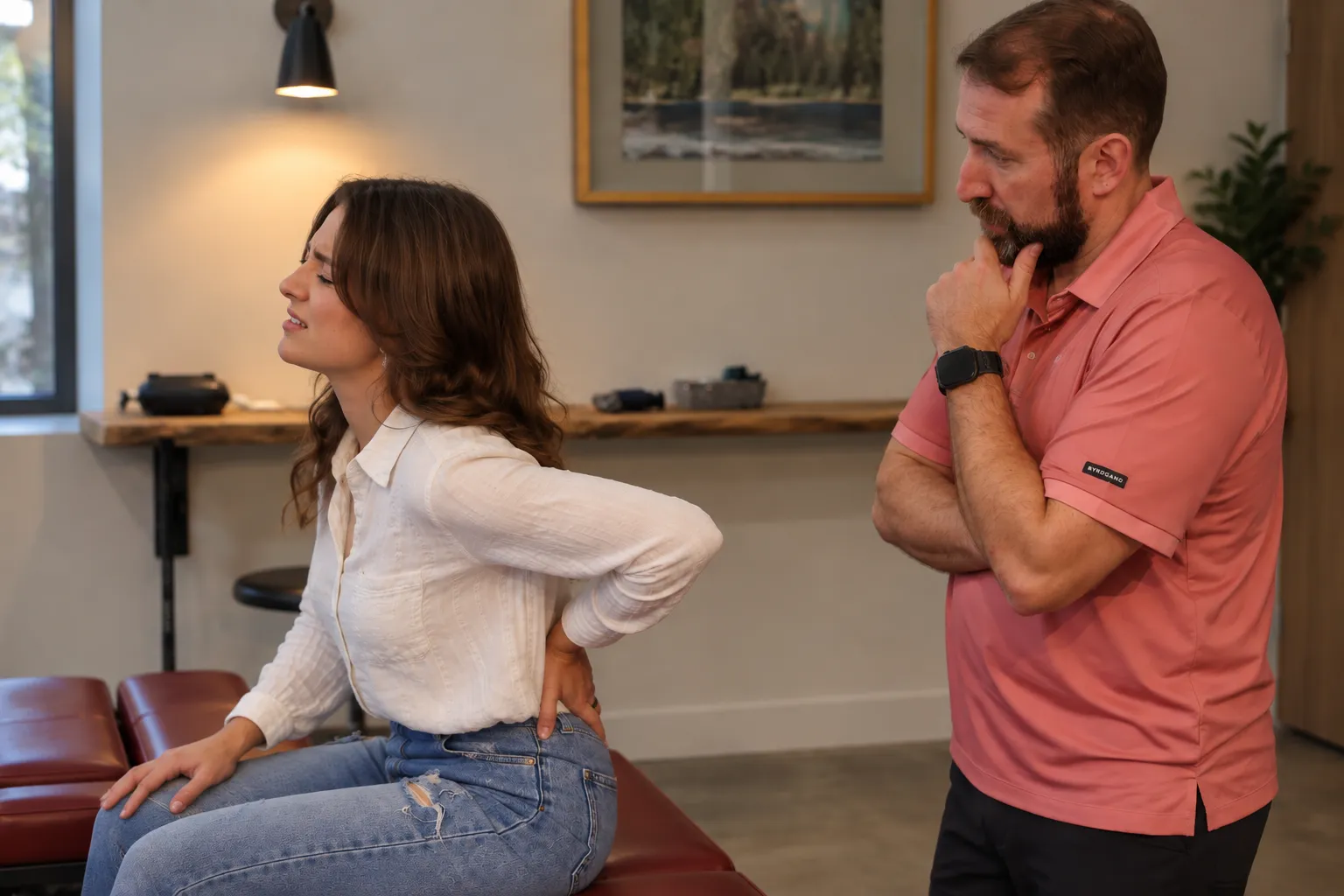
Chiropractic BioPhysics, or CBP, looks at your spine as a whole rather than focusing only on the spot that hurts. It uses mathematical principles to assess spinal alignment and determine where changes in the spine and posture may have developed over time.
This may completely change things if you've been dealing with neck or back pain for months or years!
You see, it might show up in your back, but you could have experienced some changes in your spine that have not been factored into normal adjustments.
Is CBP training different from standard chiropractic care?
Yes. CBP requires specialized education beyond standard chiropractic licensure, with a focus on corrective spinal rehabilitation (it has its place but unfortunately is not always the answer).
The doctors at At Thrive Wellness Center are trained in Chiropractic BioPhysics to give patients in Fayetteville access to a structural approach that goes beyond a quick adjustment. More than 1,500 patients in the region have relied on this approach as part of their care.
Which Techniques Actually Correct Your Posture?
Correcting posture isn't just about stretching more or getting an adjustment whenever something hurts. CBP uses several specific techniques, and each one has a different job.
The postural correction techniques used in CBP include mirror-image drop table adjustments, mirror-image handheld instrument adjustments, mirror-image isometric exercises, and extension-compression traction. They work together to address the way your spine is positioned and how your body holds that position over time.
Mirror-image adjustments are based on a fairly simple idea. If your spine has shifted in a particular direction, the adjustment is designed to work in the opposite direction.
With a drop table adjustment, sections of a specialized table release as the adjustment is made. This allows the doctor to apply a controlled force to the area being corrected. Handheld instruments use the same mirror-image principle but allow for a more targeted adjustment.
Then there are the exercises. Mirror-image isometric exercises help strengthen the muscles that support your corrected posture, so you're not relying on an adjustment alone. Extension-compression traction is used to work on the spine's natural curves over a series of sessions rather than trying to make a major change in one visit.
Before any of that, your posture needs to be assessed. The doctor looks at your spinal alignment and compares it with established benchmarks to identify where the spine has moved and how much correction may be needed. From there, exercises and posture recommendations can be matched to your specific findings rather than giving you a generic list of stretches.
What does a corrective care plan typically include?
An adjustment isn't necessarily the whole plan. Depending on what your assessment shows, your care may also include digital X-rays, spinal decompression, and functional rehabilitation alongside hands-on care.
Why don't quick adjustments fix posture long-term?
A quick adjustment can make you feel better, but that doesn't necessarily mean the underlying structural changes have been corrected.
That's why CBP uses a combination of techniques rather than relying on repeated adjustments whenever the pain returns. The aim is to work on the alignment itself and give your body the support and exercises it needs between visits.
What Should Your First Correction Visit Look Like?
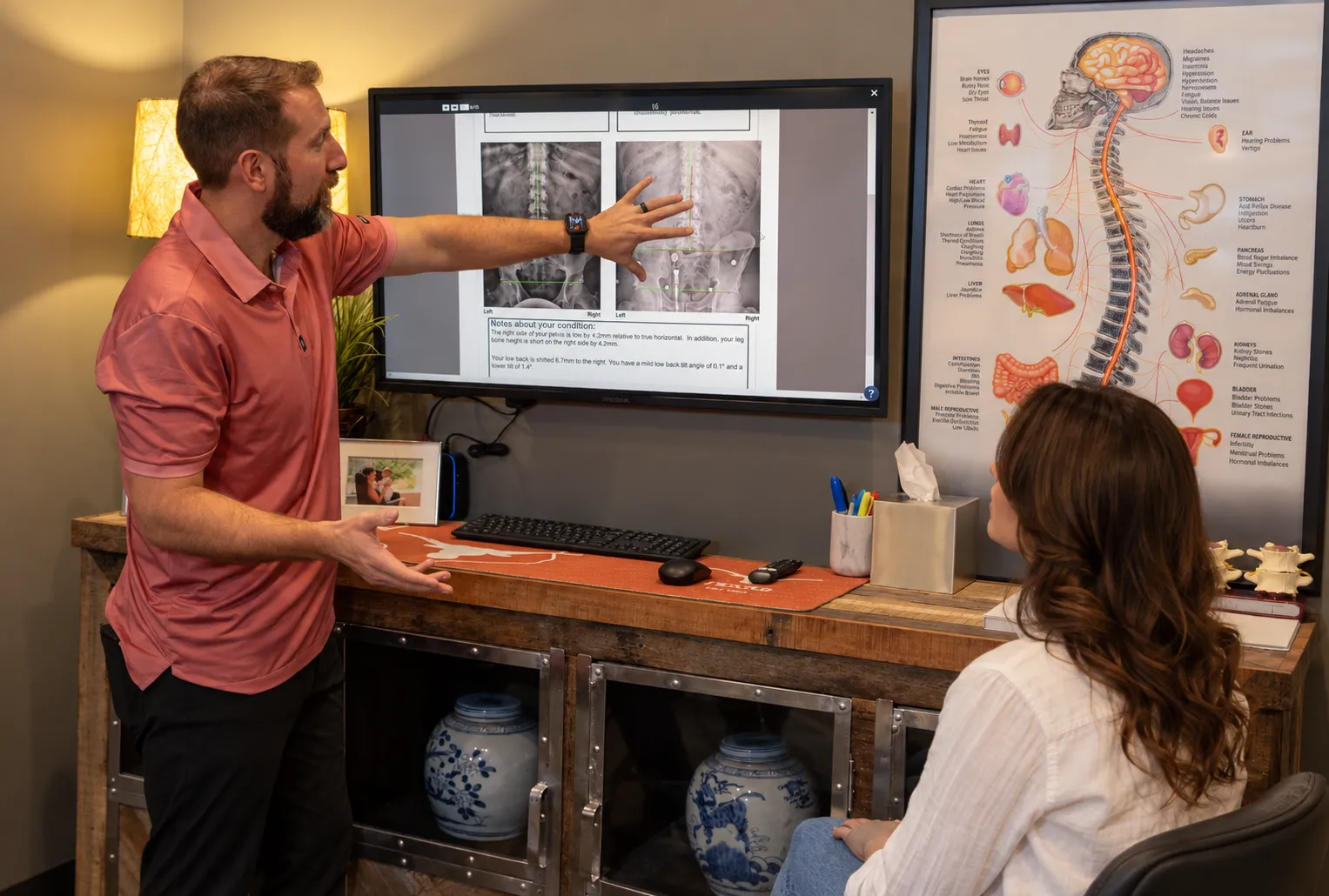
Your first visit isn't just about getting adjusted and heading home. There are a few things that need to happen first so your doctor can understand what's going on with your spine.
The visit includes an examination, consultation, digital X-rays, and an initial adjustment. If you're in Fayetteville, Arkansas, you can have that evaluation at Thrive without having to travel far from home. The goal is to get a clear picture of your spinal alignment before deciding what needs to be corrected.
The examination looks at your alignment, while the X-rays give the doctor measurable information about what's happening with your spine. Then you have time to talk through what you're experiencing and how it fits with what the examination shows. Maybe your neck gets stiff after a long drive, or that ache is always worse by the end of the workday. This is where those everyday symptoms become part of the bigger picture.
You'll also receive an initial adjustment during the visit. By the time you leave, you should have a much clearer idea of what correction could look like for you, including how many visits may be recommended, what goals you're working toward, and when your progress will be checked again.
How do I know if I need correction versus a quick adjustment?
Not every sore back or stiff neck means you need corrective care. If you've strained a muscle, for example, the soreness or tightness may settle with rest and time.
Pain that keeps returning with certain positions or activities can be a different story. When posture and spinal alignment are contributing to the problem, simply getting temporary relief may not address what's causing the symptoms to keep coming back.
Does insurance cover the first visit?
Thrive accepts most major insurance plans, including Ambetter and Blue Cross Blue Shield. Your coverage will depend on your specific plan, so it's worth checking your benefits before your appointment.
FAQ
What makes CBP different from traditional chiropractic adjustments?
CBP looks at the alignment of your spine as a whole rather than only focusing on the area that's hurting. It uses mathematical principles, mirror-image adjustments, traction, and postural exercises to work toward correcting spinal alignment over time.
Does Thrive Wellness Center offer CBP certification?
Yes. Thrive Wellness Center is one of the few Chiropractic BioPhysics-certified offices in Northwest Arkansas. CBP requires specialized training beyond standard chiropractic licensure.
What techniques do CBP postural correction plans use?
A CBP plan may include mirror-image drop table adjustments, mirror-image handheld instrument adjustments, mirror-image isometric exercises, and extension-compression traction. The techniques are used together based on what your spinal assessment shows.
How long does a full CBP correction plan usually take?
There's no single timeline because it depends on how much your spine has changed and how long those changes have been present. Your initial X-rays help establish measurable goals and determine when your progress should be re-evaluated. Rather than leaving you wondering how long you'll need care, the plan is designed around a defined series of visits and checkpoints.
How much research supports the CBP approach?
More than 341 published studies have examined CBP, making it one of the more extensively researched corrective-care approaches in chiropractic. The research is also part of why CBP uses measurable mathematical benchmarks when assessing spinal alignment [pmc.ncbi.nlm.nih.gov].
Is CBP a good fit for posture problems even without significant pain?
It can be. Changes in posture and spinal alignment don't always hurt right away. A postural assessment can identify these changes even if you're not currently dealing with significant pain, giving you a better idea of what's happening before symptoms become a bigger issue.
Does insurance cover ongoing corrective care visits, not just the first one?
Thrive accepts most major insurance plans, including Ambetter and Blue Cross Blue Shield. What your insurance covers depends on your specific policy, so it's best to confirm your benefits with the office before starting care.
What is a mirror-image adjustment, in simple terms?
Think of it as correcting in the opposite direction of the way your spine has shifted. If your spine has moved in one direction, the adjustment is designed to work against that deviation rather than applying the same adjustment to everyone. CBP can use this approach with a drop table, handheld instrument, or specific exercises.
Conclusion: If you're tired of starting over
If you keep getting temporary relief from adjustments but the same problem keeps returning, it may be worth looking at what's happening with your spinal alignment and posture.
CBP takes that longer view. Through postural assessment, X-rays, specific adjustments, exercises, and traction, the goal is to identify the structural changes contributing to your symptoms and work on correcting them over time.
At Thrive Wellness Center, you'll start with an assessment so you can understand what's happening with your spine and what correction could look like for you. You don't have to guess your way through it. You'll have measurable findings, a defined plan, and a way to track your progress.

Dr. Ben Ozanne
Chiropractor and Owner of Thrive Wellness Center
Latest from the Blog
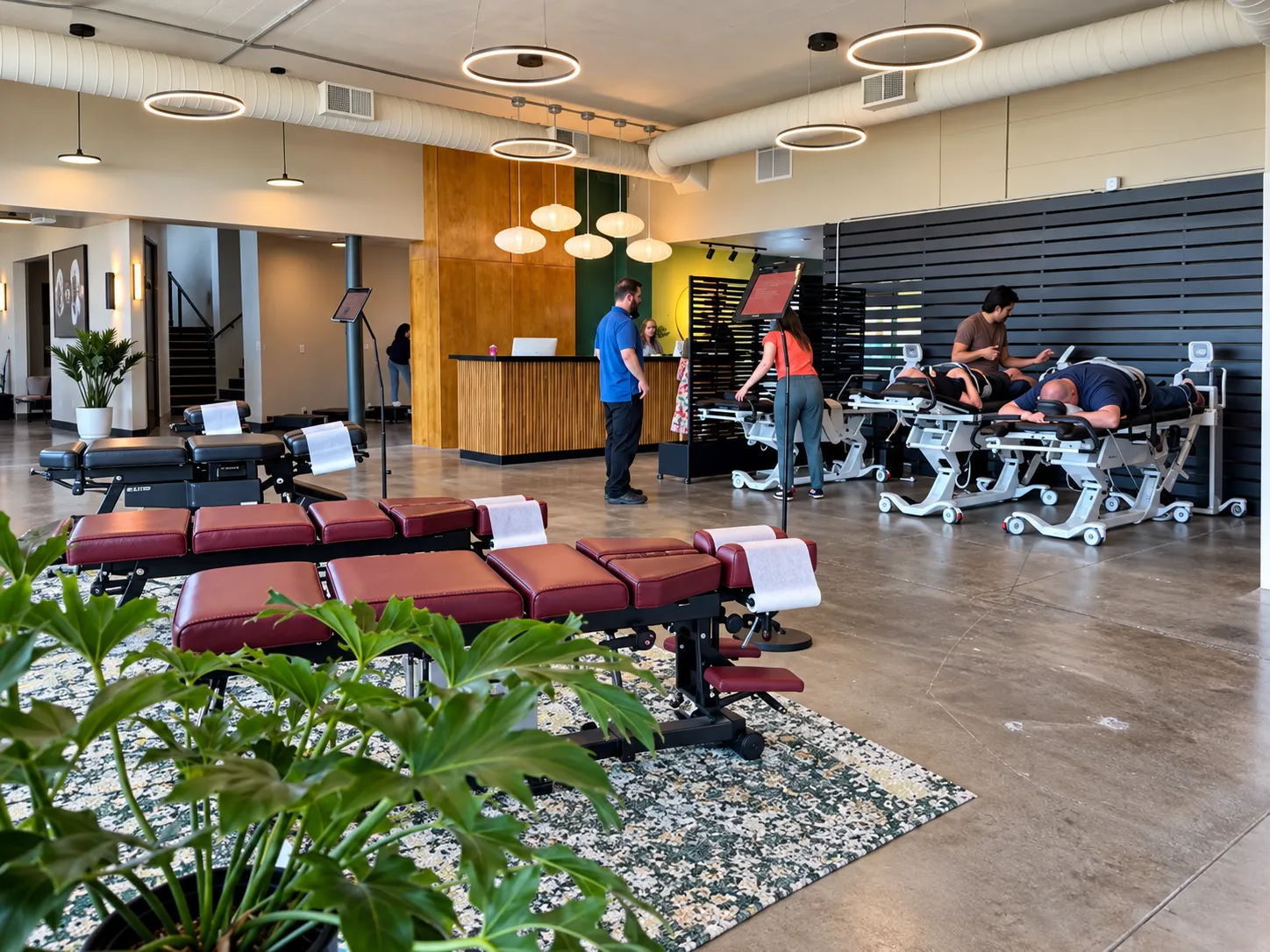
Inside a CBP Treatment Plan: What to Expect From Start to Finish
Wondering what a CBP treatment plan actually involves? See what happens from your first exam and X-rays through adjustments, mirror image traction, and follow-up imaging at Thrive Wellness Center in Fayetteville, AR.
Structural Correction vs. Traditional Adjustments: What's the Difference?
Traditional adjustments can restore movement and ease pain. Structural correction adds measurable spinal and postural findings you can track over time. Here is how the two approaches differ, and what progress looks like when it is measured instead of guessed at.

What Is Chiropractic Bio Physics? A Patient's Guide to CBP
Chiropractic BioPhysics (CBP) is a research-based corrective chiropractic approach that looks beyond pain relief to correct spinal alignment and posture. Here's what patients can expect from CBP care at Thrive Wellness Center.