TMJD & JAW PAIN TREATMENT IN FAYETTEVILLE, AR
Getting to the Source of Jaw Pain
Jaw pain can make everyday things like eating, talking, sleeping, and even concentrating uncomfortable. At Thrive Wellness Center, we look beyond the jaw itself.
What Is TMJD (Temporomandibular Joint Dysfunction)?
The temporomandibular joints connect your jaw to your skull. They help you chew, talk, swallow, and open and close your mouth.
TMJD can develop when these joints or the muscles around them become irritated, strained, or imbalanced. The result can be anything from mild jaw tension to ongoing pain and difficulty moving the jaw.
But the jaw doesn’t work on its own. Posture, neck alignment, and muscle tension can all influence how it moves. The neck, spine, and upper back help support the head, so changes in that system can affect how the jaw functions, too.
TMJ by the Numbers
~5%
of U.S. adults have a TMD
2× More Common
the age range when women are most affected
35 to 44
Many TMJ cases are linked to cervical spine issues.
Symptoms Often Associated With Jaw Dysfunction
Jaw problems don't always feel like they're coming from your jaw. Headaches, ear pressure, facial tension, and neck pain can all occur alongside temporomandibular disorders (TMD), which can make it easy to look for another explanation first. The NIDCR notes that TMD symptoms can overlap with other conditions, making diagnosis difficult.
Some symptoms to look out for include:
- Jaw pain or soreness
- Clicking or popping when opening or closing the mouth
- Difficulty opening the mouth fully
- Headaches or migraines
- Neck and shoulder tension
- Facial tension or tightness
- Ear discomfort or pressure

When Should You Get Jaw Pain Checked?
A jaw that clicks once in a while is not necessarily a problem. In fact, painless clicking and popping can be common and may not require treatment.
Pain or changes in how your jaw works are different. It is worth having your jaw checked when the problem keeps coming back, starts interfering with eating or talking, or makes it harder to open and close your mouth normally.
You should consider an evaluation when:
- Jaw pain or tenderness does not settle
- Your jaw catches, locks, or feels difficult to move
- Chewing becomes painful or uncomfortable
- A previously painless click becomes painful
- You notice a change in how your teeth come together
- Jaw symptoms are accompanied by persistent facial or neck pain
A jaw evaluation can help determine whether the symptoms are coming from the temporomandibular joint, the surrounding muscles, the neck, or another source. TMD can overlap with other conditions, which is one reason diagnosis is not always straightforward.

How We Approach Jaw Pain at Thrive
You might come in with jaw pain, but the jaw may not be the only thing worth looking at. The way your head sits over your neck, how you hold your posture during the day, muscle tension, and even habits like clenching can all be part of the picture.
At Thrive, the first visit is about figuring out what is going on before deciding what needs to be done. That means looking at your jaw, neck, posture, movement, and health history rather than assuming every case of TMJ needs the same treatment.
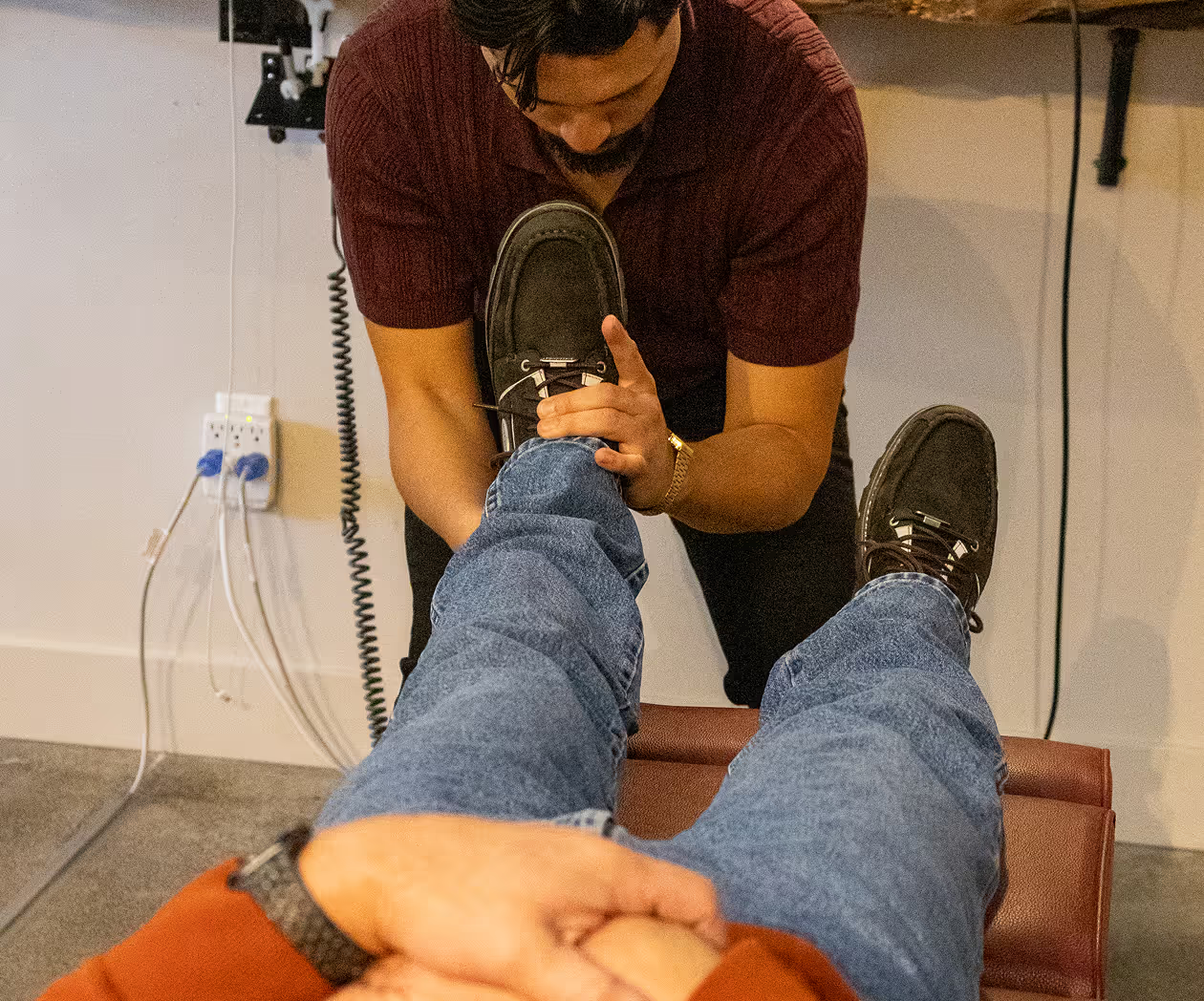
From there, care can be tailored to what is actually showing up. That may include targeted chiropractic care for the neck and upper spine, posture-focused Chiropractic BioPhysics®, or specific exercises to improve movement and reduce muscle tension.
The point is not to give every person with jaw pain the same treatment. It is to figure out what may be contributing to yours and build care around that.
Detailed Health & Symptom History
Understanding jaw symptoms, stress, posture, and daily habits.
Posture & Neck Assessment
Evaluating how head and neck alignment affect jaw mechanics.
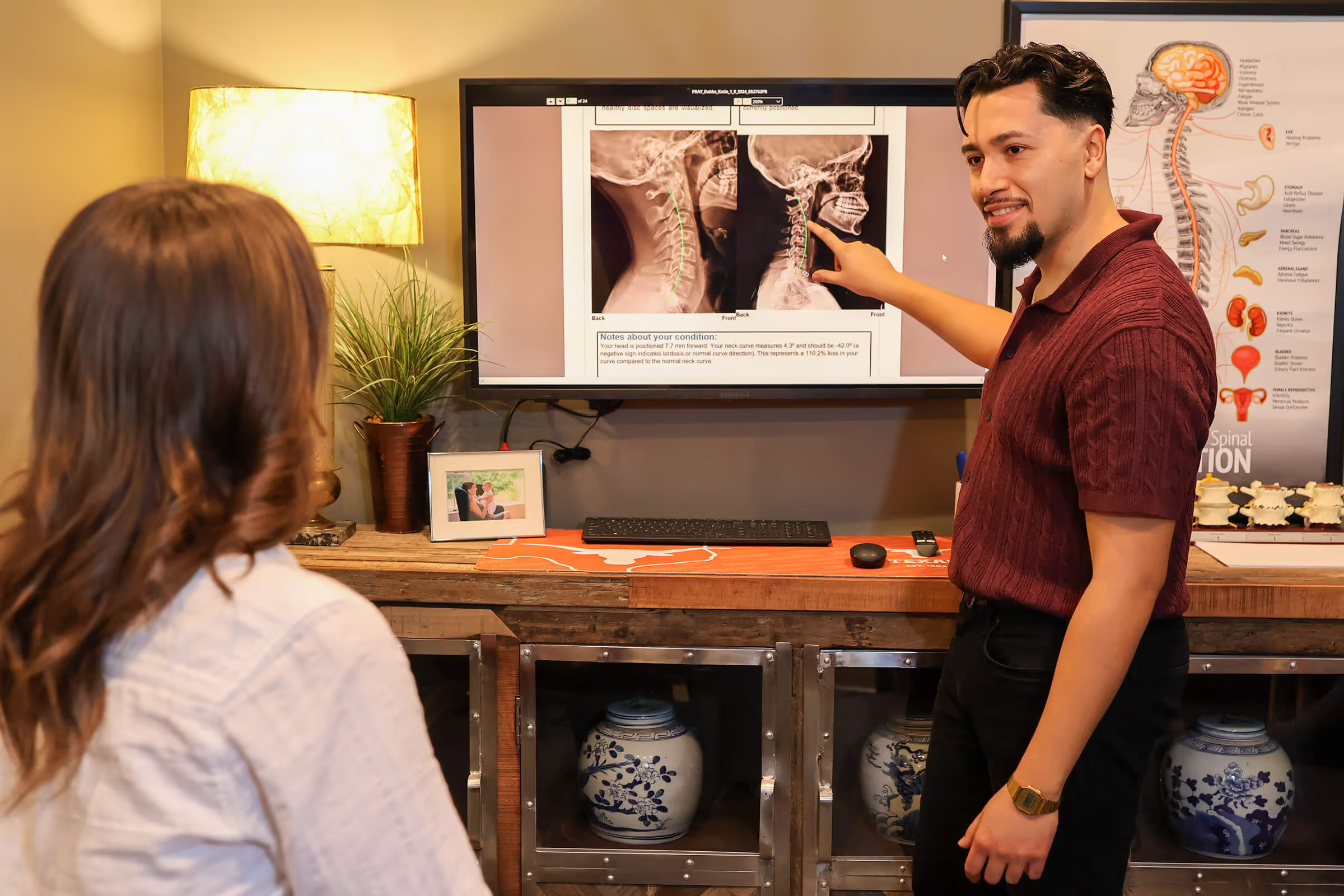
X-Ray Analysis (When Clinically Appropriate)
Assessing cervical spine alignment and structural stress.
Gentle Chiropractic Adjustments
Targeting the neck, upper spine, and jaw-related structures.
Chiropractic BioPhysics® (CBP®)
Postural correction to reduce strain on the jaw and neck.
Rehabilitation & Movement Support
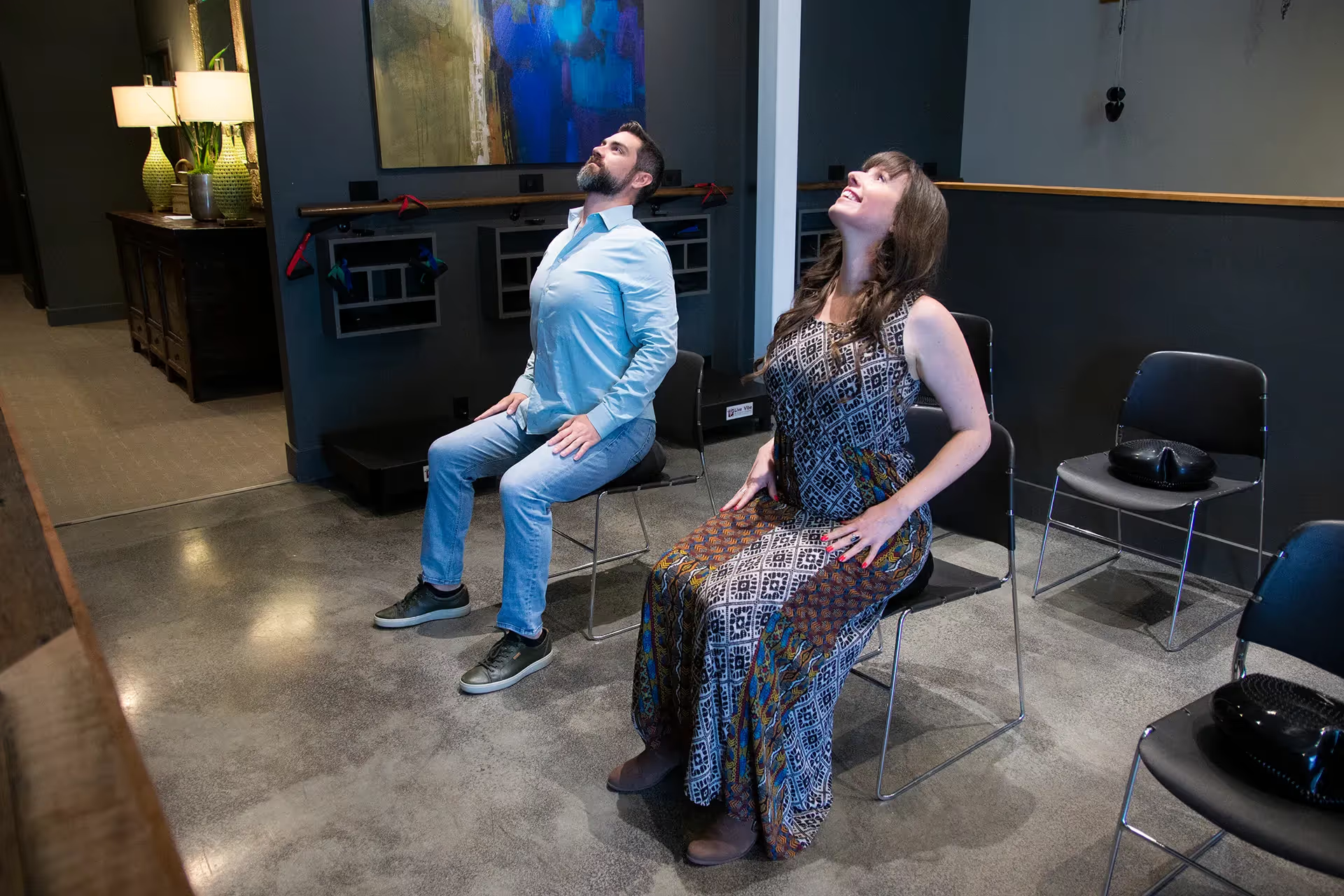
Exercises to support stability and reduce muscle tension.
Why We Start With Conservative Jaw Pain Care
Jaw pain does not always have one obvious cause, and treatment does not need to start with the most invasive option. For many TMD problems, conservative care is used first because it gives the jaw and surrounding structures a chance to respond without immediately turning to irreversible procedures.
At Thrive Wellness Center, that means starting by looking at what may be contributing to your symptoms and choosing care based on what is found.
That may mean:
- No medication or injections as the first step: The focus is on assessing the mechanical and postural factors that may be contributing to your symptoms.
- No aggressive jaw manipulation: Care is kept focused on appropriate areas, including the neck and upper spine, rather than forcefully manipulating the jaw.
- No pressure toward irreversible treatments: You should have time to understand your options before considering procedures that permanently alter the teeth or jaw.
Conservative care does not mean ignoring your symptoms or simply telling you to live with them. It means starting with the least invasive approach that may be appropriate, then paying attention to how your symptoms respond.
For someone dealing with jaw pain, clicking, headaches, facial tension, or other symptoms that may be connected to TMD, that distinction matters. The aim is to figure out what is contributing to the problem before deciding how it should be treated.
Chiropractic Care
Chiropractic Adjustments
Chiropractic BioPhysics® (Postural Correction)
Physical Rehabilitation & Functional Movement
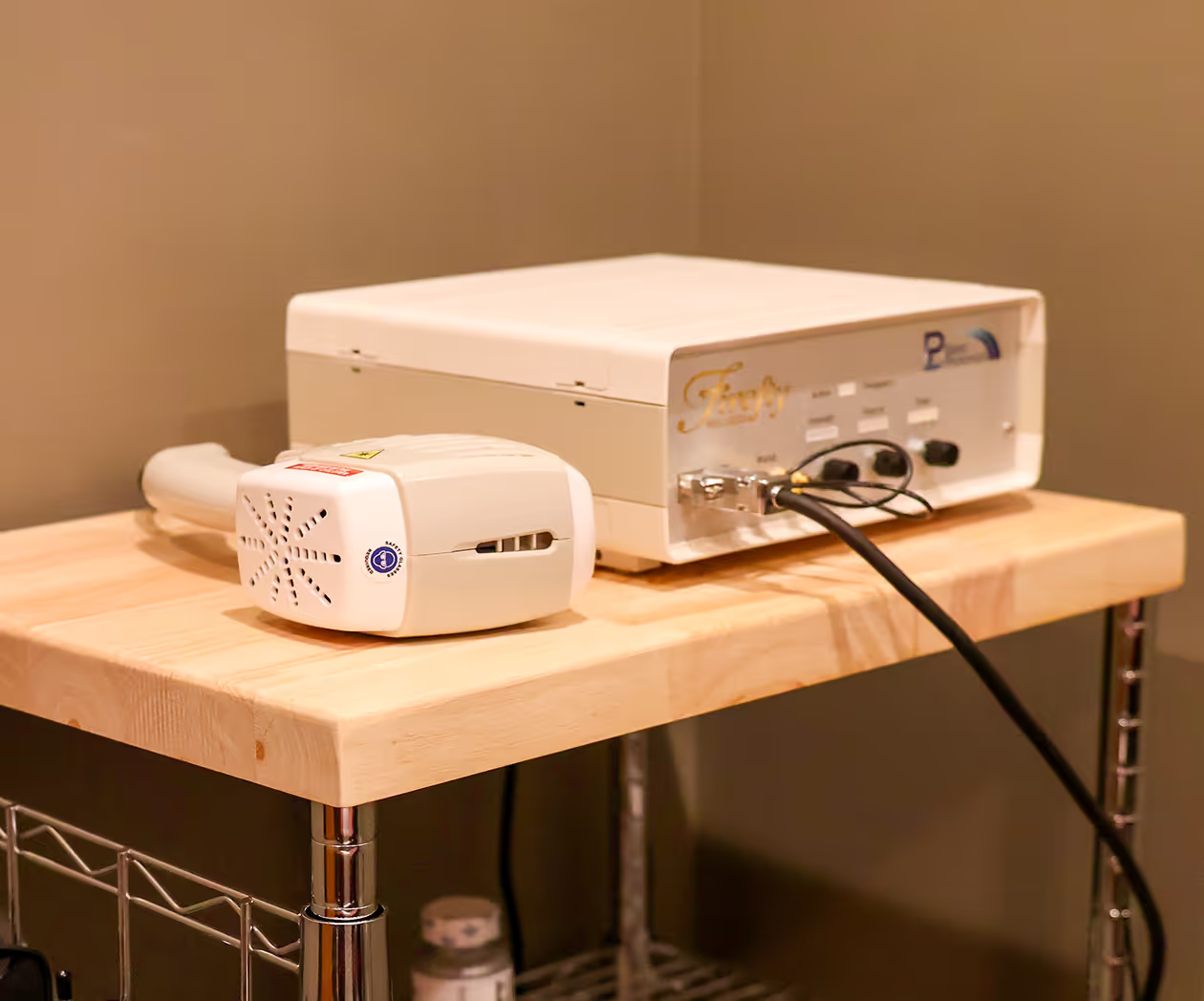
PEMF Therapy
Why a Chiropractor for TMJ?
Because TMJD is rarely just about the jaw. When the neck, upper spine, and posture are out of alignment, the jaw compensates, leading to tension, clicking, and pain.
Chiropractic care addresses the full picture: neck alignment, postural correction, muscle tension, and jaw mechanics. By treating the contributing factors, not just the symptoms, many patients find lasting relief.
Chiropractic care for TMJD may help with:
- Jaw pain and soreness
- Headaches and migraines
- Neck and shoulder tension
- Clicking or popping sounds
- Facial tension or tightness

Common Symptoms of TMJ Disorders
Jaw Clicking or Popping
Discomfort or tenderness during eating or talking.
Jaw Locking
Difficulty fully opening or closing the jaw.
Pain While Chewing
Sounds or sensations when opening or closing the mouth.
Ear Pain or Fullness
TMJD symptoms are often mistaken for ear-related problems.
Headaches & Migraines
Jaw dysfunction may contribute to recurring headaches and facial tension.
Neck & Shoulder Tension
Tightness in the neck and shoulders commonly occurs alongside TMJ disorders.
Common Symptoms of TMJ Disorders
Stress & Teeth Grinding
Clenching and grinding can strain the jaw joint and surrounding muscles.
Cervical Spine Misalignment
Poor neck alignment can affect jaw movement and function.
Injury or Trauma
Accidents, sports injuries, or dental work may impact the jaw joint.
Poor Posture
Forward head posture places extra stress on the jaw and neck.
What Patients Say About Jaw Pain Relief at Thrive
"Everyone is so kind and welcoming. I have upper back relief for the first time in years. My TMJ is so much better. I can eat without pain."
Jeremy and Laura Holland, Google review
"I went in with hip pain and tmj problems. Pain when I wake up and headaches every other day! After only 3 weeks now I am so thankful to report I haven't had any headaches nor any hip pain."
Juanita Elery, Google review
TMJD & Jaw Pain Treatment in Fayetteville, AR
Thrive Wellness Center provides TMJD and jaw pain care to patients in Fayetteville, Springdale, Johnson, Farmington, Prairie Grove, and across Northwest Arkansas.
If jaw pain is affecting your comfort or quality of life, you don’t have to navigate it alone.
Caring for Communities Across Northwest Arkansas
We're proud to serve patients across Fayetteville, Springdale, Rogers, Bentonville, Johnson, Farmington, Prairie Grove, and surrounding Northwest Arkansas communities, including the University of Arkansas community, with personalized chiropractic care for every stage of life.
Why Thrive Is Different
CBP® Certified Expertise
Dr. Ben is the only CBP® (Chiropractic BioPhysics®) certified chiropractor in Fayetteville, providing advanced corrective care focused on long-term spinal health.
600+ Five Star Reviews
Hundreds of patients across Northwest Arkansas have trusted Thrive Chiropractic for compassionate care and lasting results.
Serving Fayetteville Since 2012
Serving Northwest Arkansas for more than a decade, we've proudly helped individuals and families throughout the community improve their health and quality of life.
Frequently Asked Questions
Yes. While many people associate TMJ disorders with dentistry, the jaw joint is closely connected to the cervical spine and upper neck. Misalignment in the upper cervical vertebrae can directly contribute to jaw tension, clicking, and pain. Chiropractic care addresses these structural connections through gentle adjustments, postural correction, and supportive therapies. Many TMJ patients who haven't found relief through dental interventions alone experience significant improvement when cervical spine alignment is addressed.
Treatment at Thrive typically includes a thorough evaluation of both the jaw and cervical spine, including posture assessment and X-rays when appropriate. Care may involve gentle chiropractic adjustments to the upper cervical spine and jaw, postural correction through CBP techniques, soft tissue work to reduce muscle tension around the jaw and neck, and rehabilitative exercises. The approach is conservative, non-invasive, and tailored to your specific symptoms and findings.
Most patients begin to notice improvement in jaw comfort and function within the first few weeks of care. A full course of treatment typically runs 6-12 weeks depending on the severity and how long the condition has been present. Chronic TMJ cases that have developed over years may take longer to fully stabilize. We track your progress throughout and adjust your care plan as you improve.
Jaw clicking or popping on its own is not always a cause for concern, but it can be a sign that the temporomandibular joint is not tracking properly. If clicking is accompanied by pain, locking, difficulty chewing, or headaches, it's worth getting evaluated. These symptoms can worsen over time if the underlying cause isn't addressed. An evaluation can help determine whether care is needed or if monitoring is sufficient.
Yes, this is one of the most common connections. The muscles and nerves around the jaw are closely linked to the head, neck, and face. When the temporomandibular joint is dysfunctional, it can trigger tension headaches, migraines, and referred pain in the temples, behind the eyes, and around the ears. Many patients who have been treating headaches without relief discover that their jaw is a contributing factor. Addressing TMJ dysfunction often leads to a noticeable reduction in headache frequency and intensity.
It depends on the cause. Dentists are the right choice for issues related to bite alignment, teeth grinding appliances (night guards), or dental work that may be contributing to jaw stress. A chiropractor is the right choice when cervical spine misalignment, posture, or structural tension is contributing to jaw dysfunction. In many cases, both approaches complement each other. At Thrive, we'll evaluate whether your TMJ issue has a spinal or postural component and recommend the most appropriate path forward, including referral to a dentist if needed.
Related Articles
Pinched Nerve in Neck or Back: Symptoms & Chiropractic Treatment
Pinched nerve treatment from Dr. Ben Ozanne in Fayetteville, AR. Spinal adjustments, decompression, and rehab for neck and back nerve pain relief
The Link Between Stress And Headaches
Postural Stress: The Link Between Tech Neck And Pain
Making Sense of Your Jaw Pain
Eating, talking, sleeping, and even opening your mouth can become frustrating when your jaw isn't working comfortably. Thrive takes the time to look at what may be contributing to your symptoms and whether conservative care is appropriate for your situation.
Thrive Wellness Center provides TMJ and jaw pain care for patients in Fayetteville, Springdale, Johnson, Farmington, Prairie Grove, and across Northwest Arkansas.