Why Your Chronic Lower Back Pain Keeps Coming Back
August 31, 2026

Your back feels better, so you get back to normal. Then one morning you wake up stiff again. Or you sit too long, bend the wrong way, finish a workout, and suddenly, the same pain is back.
It’s frustrating, especially when you thought you had already dealt with it. But according to research, recurring lower back pain is common: up to 70% of people experience another episode within a year of recovering from the first.
The important part is figuring out what keeps setting yours off. Sometimes the pain settles while the problem contributing to it, such as poor posture, prolonged sitting, muscle imbalance, or an issue with how the spine is moving, is still there. Until you know what’s driving the pattern, it’s easy to end up treating each flare-up as a new problem instead of understanding why it keeps happening.
Key Takeaways
- Lower back pain returning doesn't necessarily mean you've injured your back again. Recurring pain can have several contributing factors rather than one obvious cause.
- Look for patterns around your flare-ups, including long periods of sitting, certain activities, stiffness, or changes in movement, and keep track of what makes the pain better or worse.
- Regular movement, manageable exercise, and breaking up long periods of inactivity are practical ways to reduce some of the everyday strain on your back.
- Pain that repeatedly returns in the same place, travels into your leg, or changes the way you walk is worth discussing with a provider rather than continually waiting for it to settle on its own.
- For recurring pain, treatment should be based on what an individual assessment finds. At Thrive Wellness Center, this may include corrective chiropractic care, decompression, rehabilitation, and guidance for what you can do between visits.
Why Does Lower Back Pain Keep Coming Back?
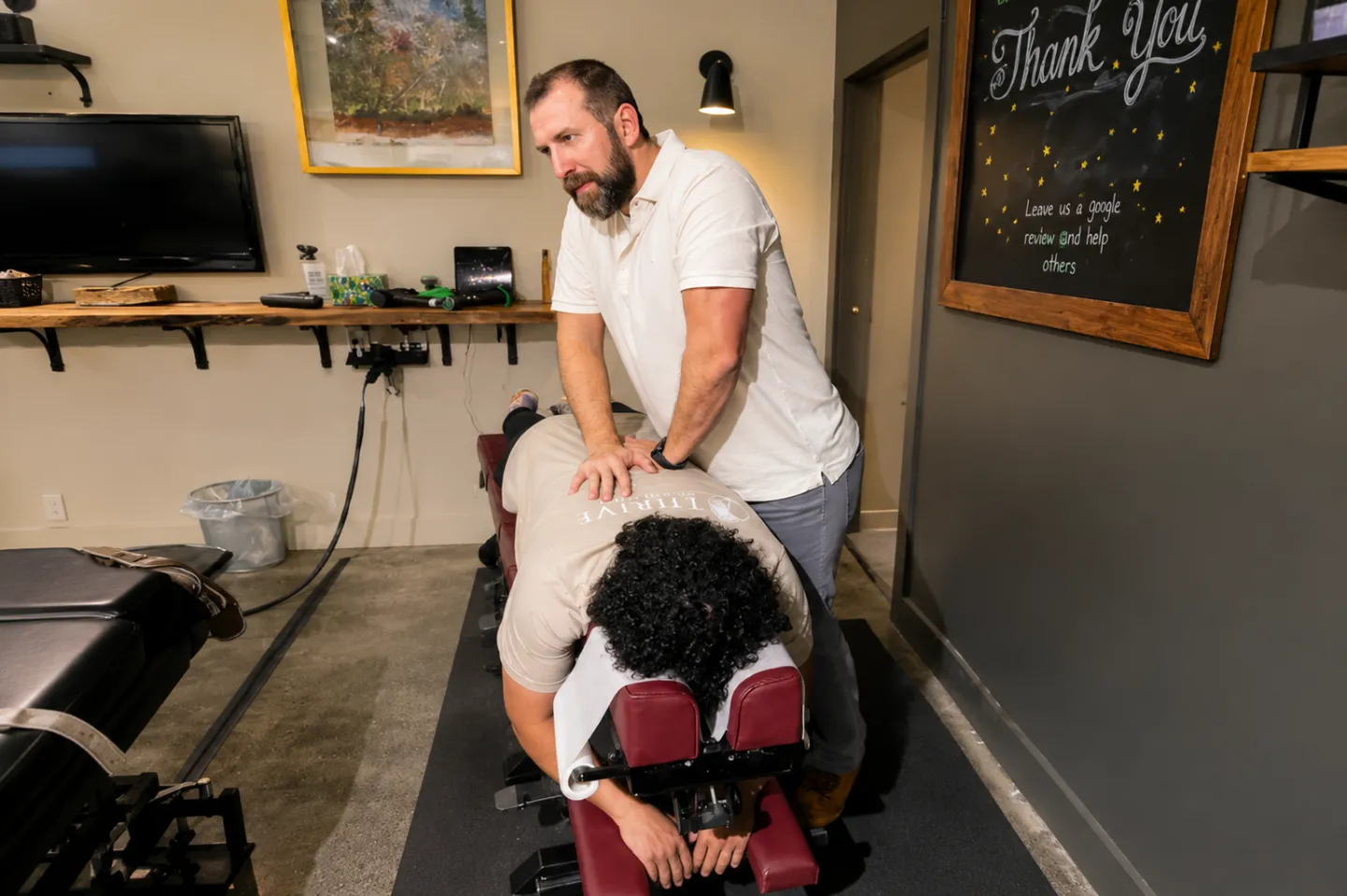
One of the most confusing things about recurring back pain is that it can disappear long enough for you to think the problem is over. You start sitting, exercising, lifting, or working as usual again, and then something seemingly small brings the pain back.
That doesn't always mean you've injured your back again.
Chronic lower back pain is rarely as simple as finding one damaged muscle, joint, or disc. There are several possible causes of lower back pain, and knowing which symptoms deserve closer attention can help you make sense of what you're experiencing. The World Health Organization (WHO) notes that, in chronic primary low back pain, it is often not possible to identify one specific tissue or disease as the cause [who.int]. Instead, several things can influence the pain at the same time, including strength and movement, how the nervous system processes pain, stress and other psychological factors, and a person's daily environment and routines.
This helps explain why two people with similar-looking back problems can have completely different experiences, and why treating only the area that hurts doesn't always stop the pain from returning.
What Actually Breaks the Cycle of Recurring Pain?
The first step is working out what is contributing to your pain, rather than assuming every flare-up has the same cause.
That assessment may include looking at how your back moves, where movement is restricted, muscle strength, posture, previous injuries, what makes the pain better or worse, and what you do throughout a normal day. Imaging may also be appropriate when the clinician needs more information about a possible structural problem.
Treatment can then be built around what the assessment actually finds.
This is also why chronic back pain treatment isn't necessarily one treatment repeated over and over. WHO's guidance recommends a person-centered approach and notes that some people may benefit from a combination of interventions rather than a single treatment used on its own. These can include exercise, education and self-care strategies, certain physical therapies, including spinal manipulation, psychological therapies, and other appropriate treatments.
For someone who keeps getting the same flare-up, the goal isn't simply to get through another painful week. It's to understand the pattern well enough to reduce the factors that keep bringing them back.
Does Physical Therapy Alone Fix Recurring Back Pain?
Physical therapy can be an important part of treatment, particularly when weakness, reduced mobility, or certain movement patterns are contributing to the problem. But there isn't one treatment that works for every case of recurring lower back pain.
For example, strengthening your back and core may help with one part of the problem, while your assessment identifies something else that also needs attention. Your daily sitting habits, mobility, sleep, stress, previous injuries, and other factors can all affect how your back responds over time.
At Thrive Wellness Center, this is where corrective chiropractic care may form part of a broader treatment plan. Rather than deciding on treatment from symptoms alone, the aim is to assess what's happening first and then determine which combination of care is appropriate for the individual.
The important distinction is this: feeling better and understanding why you keep hurting aren't always the same thing. When back pain repeatedly returns, the second question becomes just as important as the first.
What Lifestyle Habits Fuel Chronic Lower Back Pain?
You don't need to lift something heavy or have an obvious injury for your back to start bothering you again. Sometimes it's what happens during the other eight, ten, or twelve hours of your day that matters.
Just think about a normal day at work. You sit through the morning without getting up, lean toward your laptop, drive home, and then spend another hour on the couch. None of those things necessarily cause back pain on its own. But long periods of inactivity, limited movement, and repeatedly staying in the same positions can become part of the bigger picture when your back is already sensitive.
Look at Your Whole Day, Not Just Your Desk Chair
A better chair can make sitting more comfortable, but it doesn't cancel out eight hours spent in it.
Instead of trying to maintain "perfect posture" all day, change positions regularly. Stand up during a phone call. Walk for a few minutes between tasks. Alternate between sitting and standing when possible. If you've been bent over gardening, cleaning, or working on something for a while, give your back a chance to move in the opposite direction.
Exercise matters too. Current guidance for chronic low back pain supports exercise programs as part of care, but that doesn't mean you suddenly need an intense workout routine. Walking, strengthening exercises, mobility work, or another form of movement you can do consistently may be more useful than being inactive all week and trying to make up for it with one hard workout.
Pay Attention to What Happens Before a Flare-Up
If your back pain keeps returning, start looking for a pattern.
Did it happen after several unusually sedentary days? Does your back become stiff toward the end of every workday? Do certain exercises consistently aggravate it? Does discomfort appear after long drives or periods of standing?
You don't need to avoid everything that has ever made your back hurt. The point is to notice repeat triggers. Keeping a simple note of what you were doing before a flare-up, how long the pain lasted, and what helped it settle can give you and your provider much more useful information than simply saying, "My back hurts again."
And if you're making sensible changes but the same pain continues to return, that's useful information too. It may be time to look beyond your daily habits and have the problem properly assessed rather than continually adjusting your chair, stretching more, or waiting for the next flare-up to pass.
How Does Corrective Chiropractic Care Stop the Cycle?
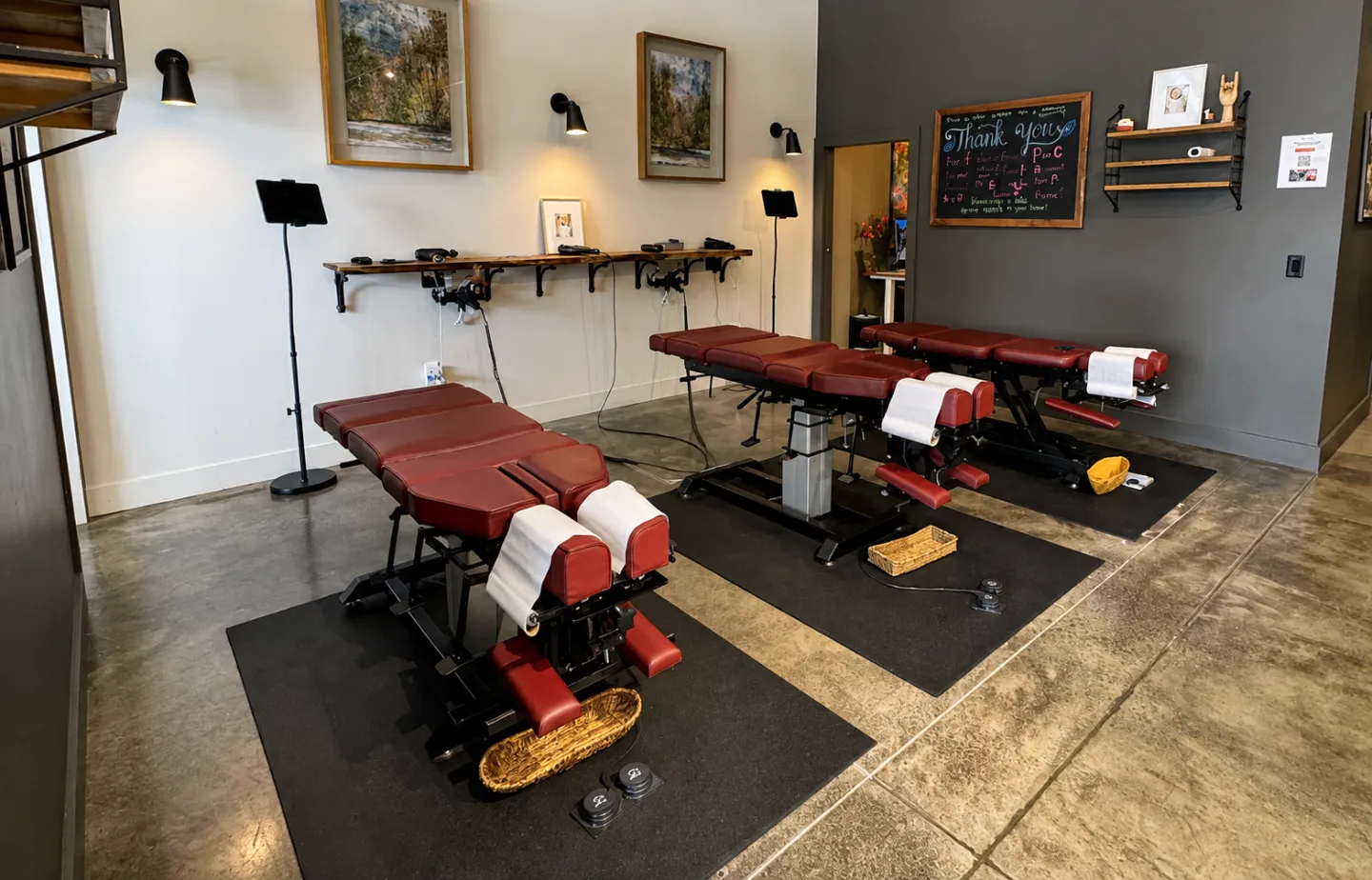
When lower back pain keeps returning, treating each flare-up exactly the same way can only tell you so much. Corrective chiropractic care takes a longer-term approach by looking at how your spine is functioning, how you move, and what may be contributing to the repeated problem.
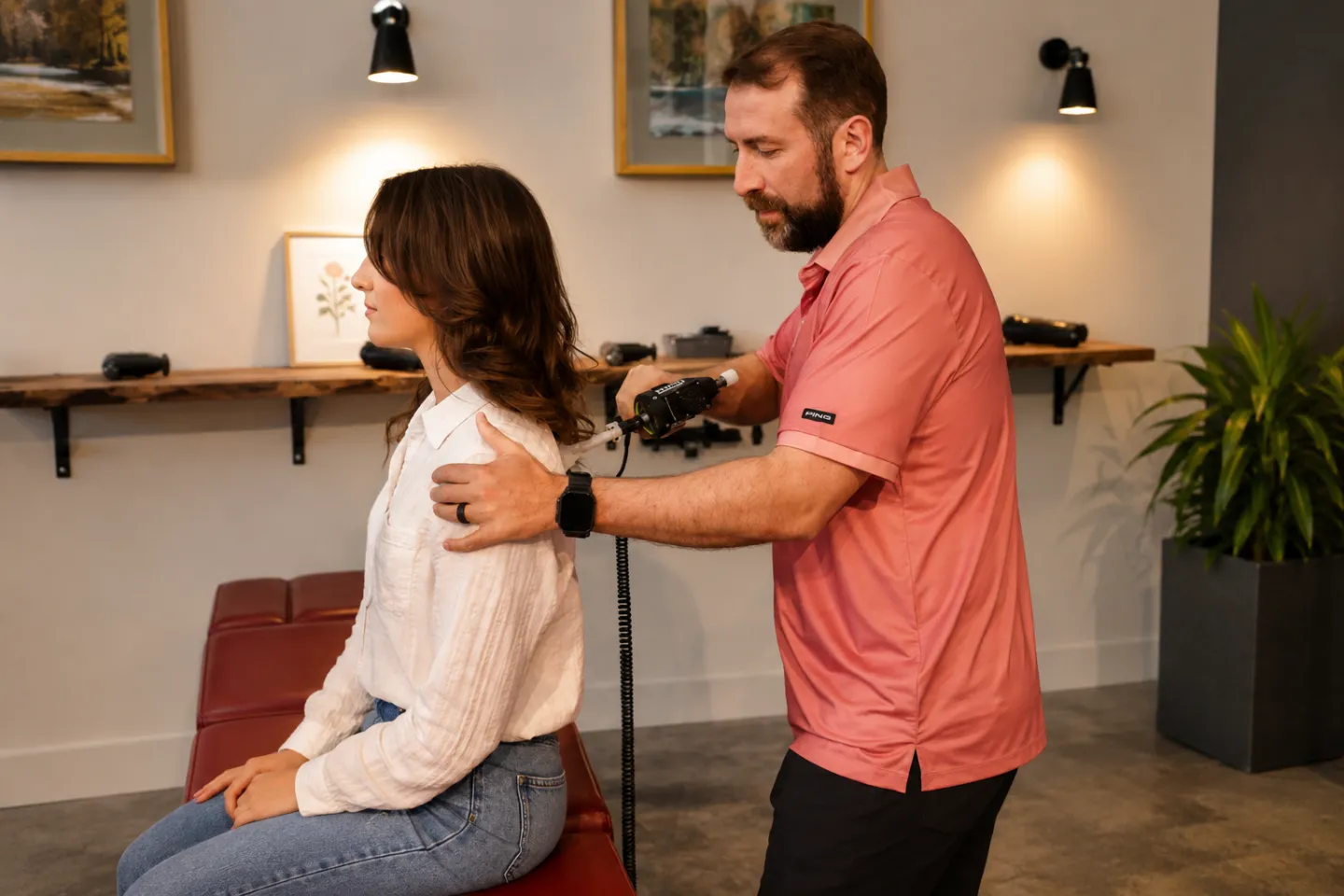
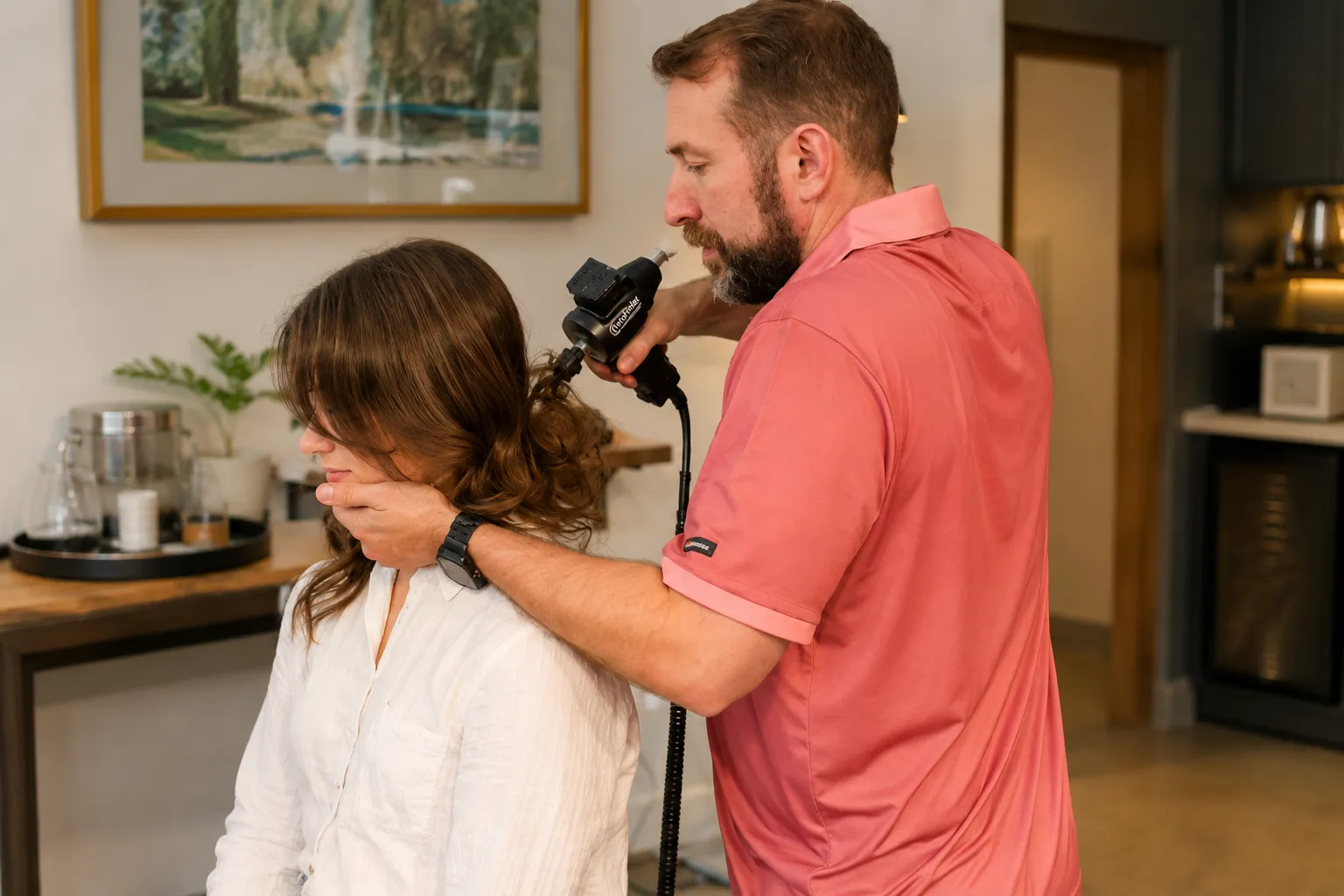
At Thrive Wellness Center, care is based on Chiropractic BioPhysics® (CBP®), a corrective chiropractic approach that uses measurable information about posture and spinal alignment to help guide treatment. Depending on what the assessment finds, care may include adjustments, spinal decompression, rehabilitation exercises, and changes you can make outside the clinic.
The goal isn't simply to make today's pain feel better. It's to understand what can be addressed now to improve function and reduce the likelihood of repeatedly ending up in the same place.
What makes a chiropractic care plan "evidence-based"?
It should start with findings that can actually be assessed and tracked.
That means your treatment shouldn't be based only on where you point when you're asked, "Where does it hurt?" Your symptoms matter, but they're considered alongside your health history, physical examination, movement and posture, and imaging when clinically appropriate.
Those findings then help determine what belongs in your treatment plan. An adjustment may be used to address joint movement, decompression may be considered in appropriate cases, and rehabilitation exercises can work on strength, mobility, and function.
Just as importantly, progress should be reassessed. If your movement improves but your pain doesn't, or your symptoms change, that's information your provider can use rather than simply repeating the same treatment indefinitely.
What happens during the first visit?
Your first visit is partly about your back pain, but it's also about the story behind it.
The Thrive Wellness Center team will want to know when the pain started, how often it comes back, where you feel it, what tends to trigger it, what makes it better, and whether you've had previous injuries or treatments. Something as ordinary as sitting at a computer all day or noticing that pain always returns after a particular activity can be relevant.
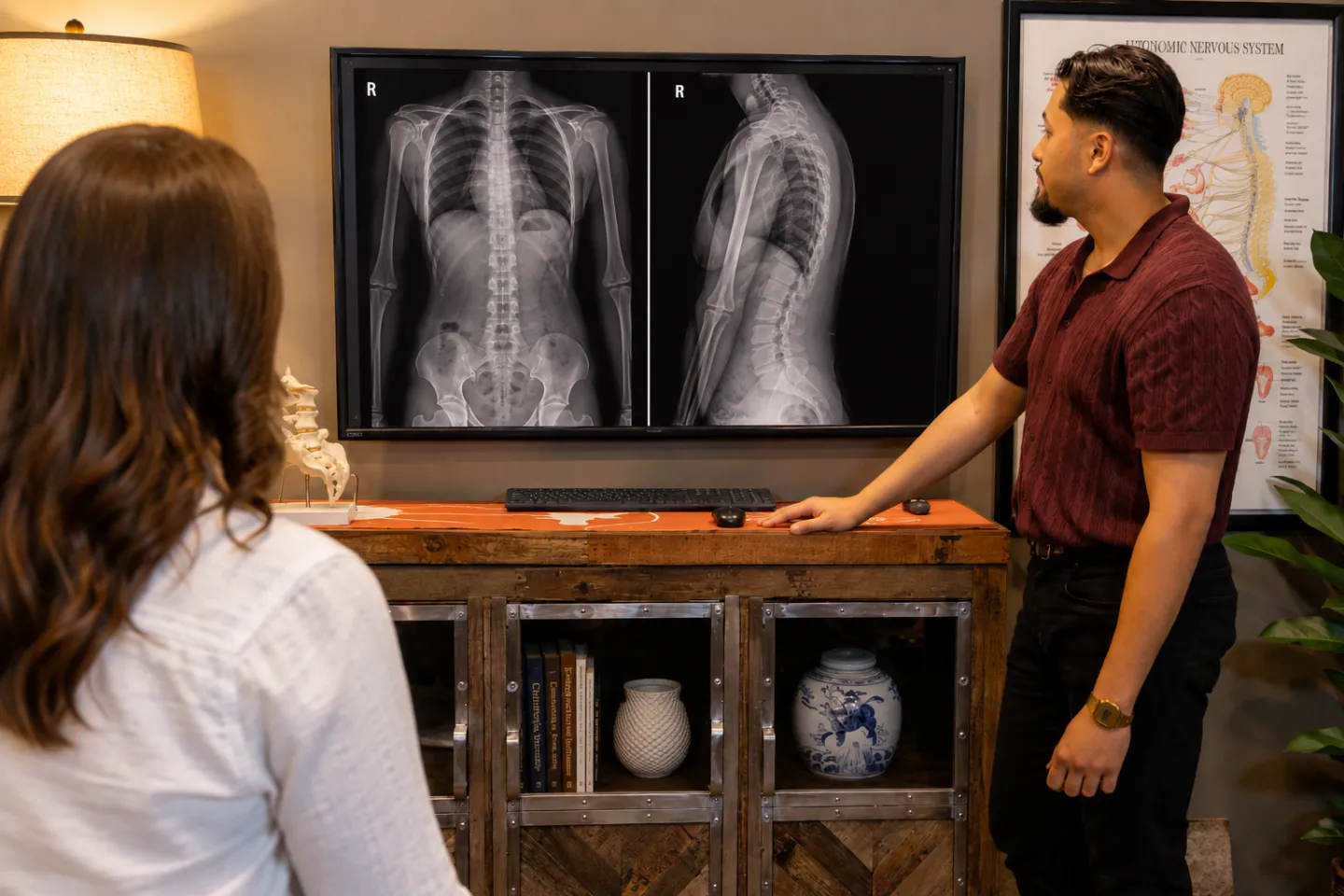
You'll also have an examination. Digital X-rays may be used to assess spinal alignment, curvature, and other structural findings when appropriate. Together, this information gives the team a baseline for deciding what treatment may be suitable rather than putting every person with lower back pain through the same routine.
From there, the team can explain what they've found, what they recommend addressing, and why. If care is appropriate, your plan may include a combination of chiropractic adjustments, decompression, rehabilitation, and guidance for what you can do between visits.
Most importantly, you should leave understanding more about your back than you did when you walked in, including what the next steps are and what the treatment plan is intended to accomplish.
Signs Your Back Pain May Be Structural, Not Just Muscular
A sore back after an unusually hard workout or a day of heavy lifting often has an obvious explanation. But it isn't always easy to tell a lower back muscle strain from something that needs further evaluation.
No single symptom can tell you exactly what's causing your back pain, but certain patterns are worth bringing up during an assessment:
- The same pain keeps returning in the same place: A repeated pattern is useful information, particularly if the pain settles and then comes back without a new injury.
- You're especially stiff after sleeping or sitting for a long time: Pay attention to how long the stiffness lasts and whether movement helps it ease.
- Stretching or resting helps, but only briefly: Short-term relief is still relief, but pain that repeatedly returns once you resume normal activities deserves a closer look.
- The pain travels into your hip, buttock, or leg: Radiating pain can sometimes involve irritation or compression of a nerve. A herniated disc is one possible cause, particularly when pain travels down the leg or occurs with numbness or tingling.
- Your posture or the way you walk has noticeably changed: You may start leaning, shifting your weight, or moving differently because something hurts. Even if someone else notices it before you do, mention it during your assessment.
The pattern matters as much as the pain itself. Before an appointment, think about where the pain starts, where it travels, when it appears, what you were doing beforehand, and what makes it better or worse. Those details can help your provider decide what needs to be examined more closely.
Stop Treating Every Flare-Up Like a New Problem
If your lower back pain has disappeared and returned more times than you can count, the next step doesn't have to be another round of waiting for it to settle.
Start paying attention to the pattern: when the pain appears, what you were doing beforehand, where you feel it, and what actually helps. Then take that information with you when you have your back assessed.
Our team looks beyond where it hurts today to understand what may be contributing to recurring episodes. If you're ready to get a clearer picture of what's happening with your back, schedule an evaluation with Thrive Wellness Center to discuss your symptoms and find out what your next steps could look like.
Frequently Asked Questions
How long does it take for corrective chiropractic care to stop recurring back pain?
There isn't a set timeline because recurring back pain doesn't look the same from one person to the next. How long you've had the problem, what is contributing to it, your overall health, and how you respond to treatment can all affect progress. Your provider should be able to explain what they're monitoring and reassess the plan as treatment continues.
Can lower back pain come back even after chiropractic treatment?
Yes. No treatment can guarantee that lower back pain will never return. A new injury, changes in activity, long periods of inactivity, or other contributing factors can trigger another episode. If pain does return, particularly in the same way or more frequently, it's worth being reassessed rather than assuming you simply need another adjustment.
Is physical therapy or chiropractic care better for recurring lower back pain?
It depends on what your assessment finds. Physical therapy commonly focuses on movement, mobility, strength, and function, while chiropractic care may include spinal manipulation and other hands-on treatments. Some people may benefit from more than one approach rather than treating the two as an either-or choice.
What lifestyle changes help prevent lower back pain from returning?
Start with changes you can realistically maintain. Break up long periods of sitting, move regularly throughout the day, stay physically active, and gradually build strength rather than going from very little activity to an intense workout. If you've noticed a particular activity repeatedly precedes a flare-up, mention that pattern to your provider instead of simply avoiding the activity indefinitely.
Why do doctors say up to 70% of back pain returns after the first episode?
The statistic describes how common recurrence is, not one specific reason why it happens. Research has found that a substantial proportion of people experience another episode after recovering from low back pain, but recurrence can involve several factors. Previous episodes themselves are also an important predictor of future episodes.
So, if your back hurts again after you've been feeling better, it doesn't automatically mean your previous treatment failed or that you've damaged your back again. It does mean that repeated episodes are worth looking at as a pattern rather than treating every flare-up as an isolated event.

Dr. Ben Ozanne
Chiropractor and Owner of Thrive Wellness Center
Latest from the Blog
Herniated Disc Lower Back Pain: Symptoms and Treatment
A herniated disc in your lower back can send pain, tingling, or weakness all the way into your leg and foot. Here is what the symptoms feel like, what helps in the first few days, and the warning signs that mean you should stop managing it at home.
Muscle Strain vs. Something Worse: Understanding Your Lower Back Pain
A strain usually stays put and eases day by day. Pain that travels into your leg, or comes with numbness, tingling, or weakness, is a different signal. Here is how to tell them apart and when to stop watching and get evaluated.
Injured Your Lower Back? Here's What Happens Next
Most lower back injuries improve on their own, but the first 48 hours matter. Here's what to do first, what to avoid, and when to have your back checked.