How Structural Correction Targets Back Pain at the Source
October 14, 2026
You're in the middle of a workout, feeling good, and then your back suddenly starts acting up. You try to push through, but something doesn't feel right, so you have to stop. A few days later, you're back at it, and you are wondering whether it's going to happen again.
It's frustrating when back pain keeps getting in the way of the things you enjoy. At Thrive Wellness Center in Fayetteville, Dr. Ben Ozanne assesses your spinal alignment and posture to help determine whether structural correction could be a suitable option.
But is it for you?
Key Takeaways
- Recurring back pain can stem from several causes, including muscle strains, disc problems, joint irritation, and nerve involvement. Spinal misalignment should not be assumed to be the cause without an assessment.
- Pain medication can ease discomfort without necessarily addressing the factors contributing to recurring symptoms.
- Pain that travels into the leg, tingling, numbness, or weakness may indicate nerve involvement and should be assessed appropriately.
- Chiropractic BioPhysics® (CBP®) uses spinal alignment measurements to guide specific corrective procedures. Research has examined changes in spinal curvature and pain following CBP® treatment, although the available evidence is limited.
- Structural correction may be an option when clinical findings support it. At Thrive Wellness Center in Fayetteville, Dr. Ben Ozanne offers CBP® care as part of the clinic's corrective approach.
Why Doesn't Pain Relief Last?
Pain and the problem contributing to it are not always the same thing. Medication can ease pain, but that improvement alone doesn't tell you whether the factors behind your symptoms have changed. The same applies when pain settles with rest. Returning to your usual activities may expose a problem that hasn't fully settled, or a different factor may be contributing to the next episode.
The World Health Organization's 2023 guidelines explain that persistent or recurring low back pain often cannot be traced to one identifiable source of pain in the body's tissues. Physical factors can interact with sleep, stress, daily demands, and other aspects of a person's life. This helps explain why the same treatment does not work equally well for everyone.
Research has also examined whether changing spinal alignment can make a difference for people with certain types of lower back problems. A 2020 review of controlled studies on Chiropractic BioPhysics® (CBP®) lumbar extension traction reported increases of 7 to 11 degrees in the lower spine's curve over 10 to 12 weeks. The researchers also reported that improvements in pain and disability were generally maintained at six-month follow-up in the traction groups. However, the review included only a small number of controlled studies, so these results should not be taken as a guarantee of improvement for every patient.
What's Really Causing Your Back Pain?
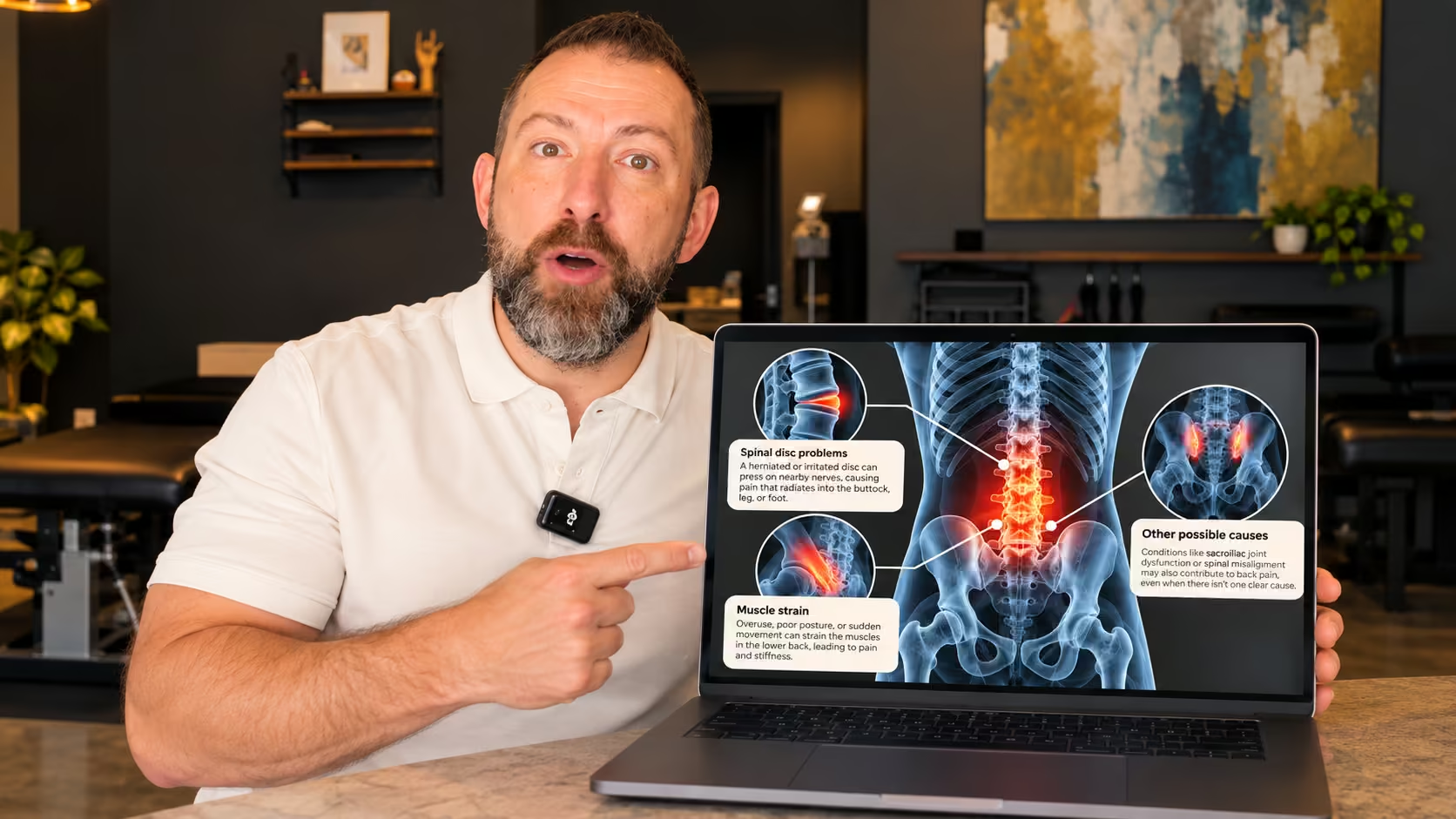
Back pain doesn't always come from the spot that hurts (believe it or not…). A problem involving a spinal disc, for example, can irritate a nerve and cause pain that travels into the buttock, leg, or foot. A muscle strain may cause pain and stiffness around the lower back, while other cases don't have one clearly identifiable cause. Treating every case as a spinal alignment problem overlooks these differences.
The World Health Organization estimates that around 90% of low back pain cases are classified as nonspecific. This means a specific disease or structural problem cannot be confidently identified as the cause. The pain is real, but its source isn't always obvious from symptoms alone.
Which Symptoms Shouldn't Be Ignored?
The way pain behaves can provide important clues, particularly when symptoms extend into the legs.
- Pain travelling into the buttock or leg: This can occur when a spinal nerve is irritated, including in some cases involving a disc.
- Tingling or numbness: Changes in sensation can indicate nerve involvement and need to be considered alongside other symptoms.
- Leg or foot weakness: Difficulty lifting the front of your foot, standing, or walking normally warrants prompt medical assessment, especially when the weakness is new or worsening.
- New bladder or bowel problems or numbness around the groin: These can indicate a serious spinal emergency and require immediate medical attention.
None of these symptoms confirms a particular diagnosis on its own. A clinical examination helps determine what may be causing them and whether further investigation is needed.
What Role Does Spinal Alignment Play?
Spinal alignment is one aspect of back health that can be assessed, but a measured change in alignment does not automatically explain a person's pain. The findings need to be considered alongside symptoms, movement, and other examination results.
At Thrive Wellness Center in Fayetteville, Dr. Ben Ozanne offers Chiropractic BioPhysics® (CBP®), a corrective approach that focuses on measuring and addressing spinal alignment. For a patient with findings that support this approach, CBP® may be considered as part of a care plan. It should not be presented as the answer to every type of back pain, particularly when symptoms suggest another condition that needs different care.
How Does Structural Correction Work at Thrive?
The shape of the spine can be measured, and those measurements can help identify changes that a corrective treatment plan may aim to address. At Thrive Wellness Center in Fayetteville, Dr. Ben Ozanne offers Chiropractic BioPhysics® (CBP®), an approach that uses spinal measurements to guide specific corrective procedures.
The process may involve digital X-rays, spinal traction, and rehabilitation, depending on the patient's assessment and needs. Each serves a different purpose.
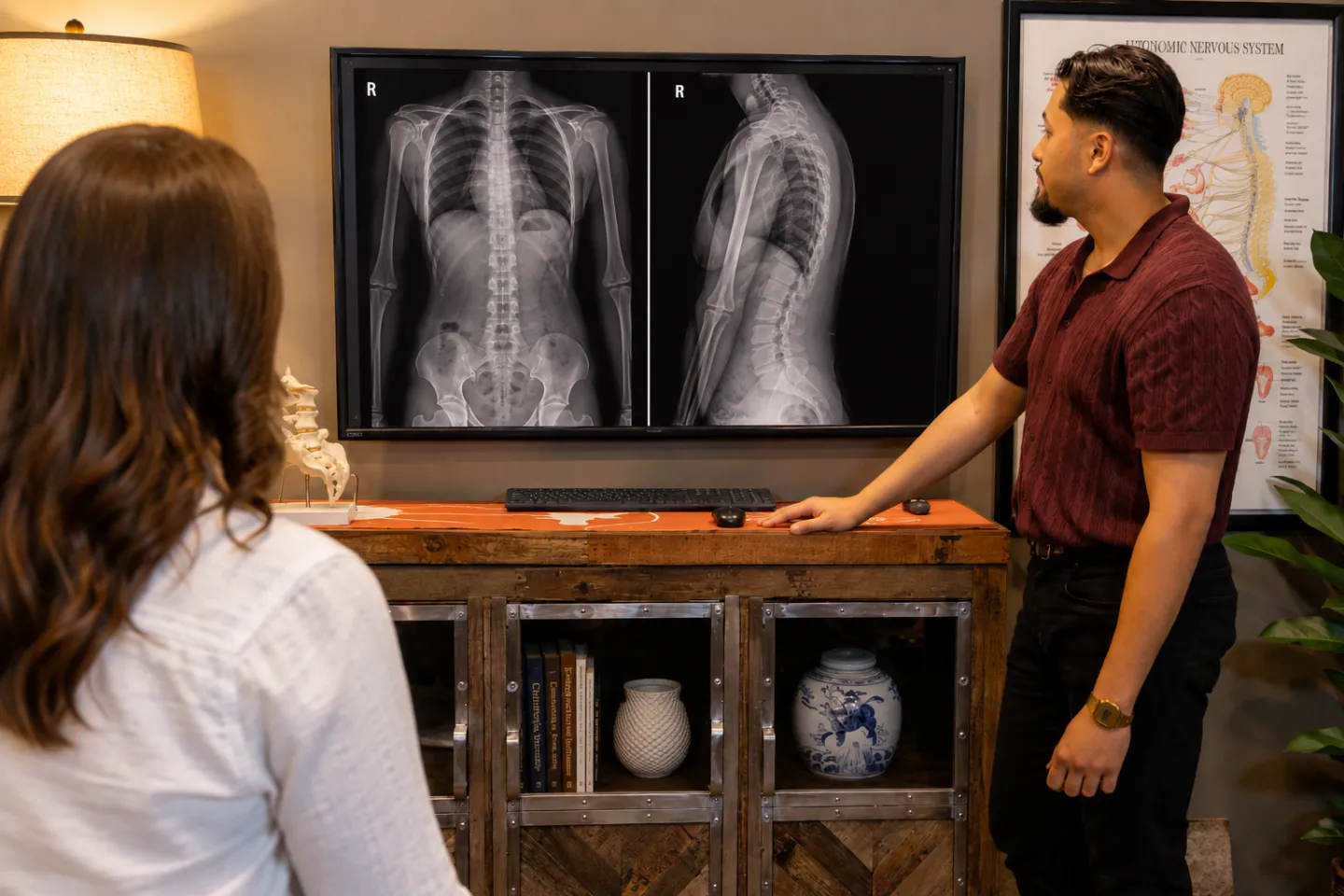
- Digital X-rays: When appropriate, X-rays allow the clinician to measure spinal curves and assess alignment. These findings can help guide corrective care, but they do not explain every cause of back pain.
- Spinal decompression: This treatment uses controlled pulling forces to target pressure on certain spinal structures. It may be considered for selected conditions, depending on the clinical findings.
- Functional rehabilitation: Specific exercises help develop strength and improve movement. They can complement other treatment by helping patients manage the physical demands of daily activities.
Meet Dr. Ben Ozanne: The Chiropractor Behind Structural Correction
Dr. Ben Ozanne, DC, has practiced in Fayetteville since 2012 and founded Thrive Wellness Center with a focus on corrective chiropractic care. His route into the profession began with a bachelor's degree in Business Management from the University of Texas at Austin, followed by his Doctor of Chiropractic degree from Parker University. He also completed training at Trinity Chiropractic.
A central part of Dr. Ozanne's approach is Chiropractic BioPhysics® (CBP®), which focuses on measuring spinal alignment and using specific corrective procedures to address certain findings. His additional techniques include extremity adjusting, Drop Table work, SOT Technique, and ArthroStim instrumentation. These give him different options when deciding how to approach a patient's needs, rather than relying on the same technique for every presentation.
For someone experiencing recurring back pain, the assessment helps determine whether spinal alignment is relevant to their symptoms and which treatment options may be appropriate. CBP® may be considered when the findings support structural correction, while other techniques may be selected for different clinical needs.
Dr. Ozanne's experience serving Fayetteville and the wider Northwest Arkansas community spans more than a decade. At Thrive Wellness Center, his CBP® training forms part of the clinic's corrective care offering, alongside other services that may be recommended according to a patient's assessment.
FAQ
Why doesn't pain relief from painkillers always last?
Pain medication can ease discomfort or reduce inflammation, but it doesn't necessarily address the reason your back hurts. Pain returning after medication wears off doesn't automatically mean you have a spinal alignment problem. The cause depends on your symptoms and clinical findings.
What can cause recurring back pain?
Recurring back pain can be linked to muscle strains, disc problems, joint irritation, nerve involvement, or other factors. Spinal alignment may also be relevant in some cases, but pain alone cannot confirm that a misalignment is responsible. An assessment helps determine which possibilities need further investigation.
How does structural correction work?
Chiropractic BioPhysics® (CBP®) uses measurements of spinal alignment to guide specific corrective procedures. The approach aims to change certain spinal alignment findings, rather than focusing on pain levels alone. Research has examined changes in spinal curvature and symptoms following CBP® treatment, but results vary and structural correction is not appropriate for every cause of back pain.
Does back pain lasting three months mean there's a structural problem?
Not necessarily. Back pain lasting more than three months is generally considered chronic, but duration alone does not prove that spinal misalignment is causing it. Persistent symptoms deserve an assessment to investigate possible causes and determine which treatments may be appropriate.
What happens during a structural correction evaluation at Thrive Wellness Center?
The evaluation considers your symptoms and clinical findings to determine whether structural correction may be suitable. Digital spinal X-rays may be used when clinically indicated to measure alignment. Depending on the findings, Dr. Ben Ozanne may discuss CBP® care or other treatment options available at Thrive, rather than assuming every patient needs the same combination of procedures.
Who provides structural correction care at Thrive Wellness Center?
Dr. Ben Ozanne, DC, founded Thrive Wellness Center and has practiced in Fayetteville since 2012. He has specialized training in Chiropractic BioPhysics® (CBP®), which forms part of the clinic's corrective care services. His treatment recommendations depend on the patient's assessment and individual needs.
A More Targeted Approach to Recurring Back Pain
Recurring back pain deserves more than another attempt to quiet the symptoms. The important question is whether something about your spinal structure is contributing to the problem, and that requires looking at the findings rather than assuming misalignment is to blame.
At Thrive Wellness Center in Fayetteville, Dr. Ben Ozanne uses his specialized Chiropractic BioPhysics® (CBP®) training to provide structural correction for patients who may benefit from this approach. CBP® focuses on measuring spinal alignment and using specific corrective procedures to address relevant findings. An assessment can help establish whether this approach makes sense for your situation and what care may be appropriate.

Dr. Ben Ozanne
Chiropractor and Owner of Thrive Wellness Center
Latest from the Blog
Why Your Chronic Lower Back Pain Keeps Coming Back
Herniated Disc Lower Back Pain: Symptoms and Treatment
A herniated disc in your lower back can send pain, tingling, or weakness all the way into your leg and foot. Here is what the symptoms feel like, what helps in the first few days, and the warning signs that mean you should stop managing it at home.
Muscle Strain vs. Something Worse: Understanding Your Lower Back Pain
A strain usually stays put and eases day by day. Pain that travels into your leg, or comes with numbness, tingling, or weakness, is a different signal. Here is how to tell them apart and when to stop watching and get evaluated.