Chiropractor for Lower Back Pain: What to Expect in Fayetteville, AR
July 31, 2026
Many people live with lower back pain longer than they should. They try stretching, pain relievers, a different mattress, or a new office chair, hoping the problem will eventually go away. Sometimes it does. Often, it keeps coming back.
A 2016 study found that patients receiving chiropractic care experienced greater pain relief and improved physical function than those receiving standard medical care alone, with roughly a 30% greater reduction in pain after 12 weeks.
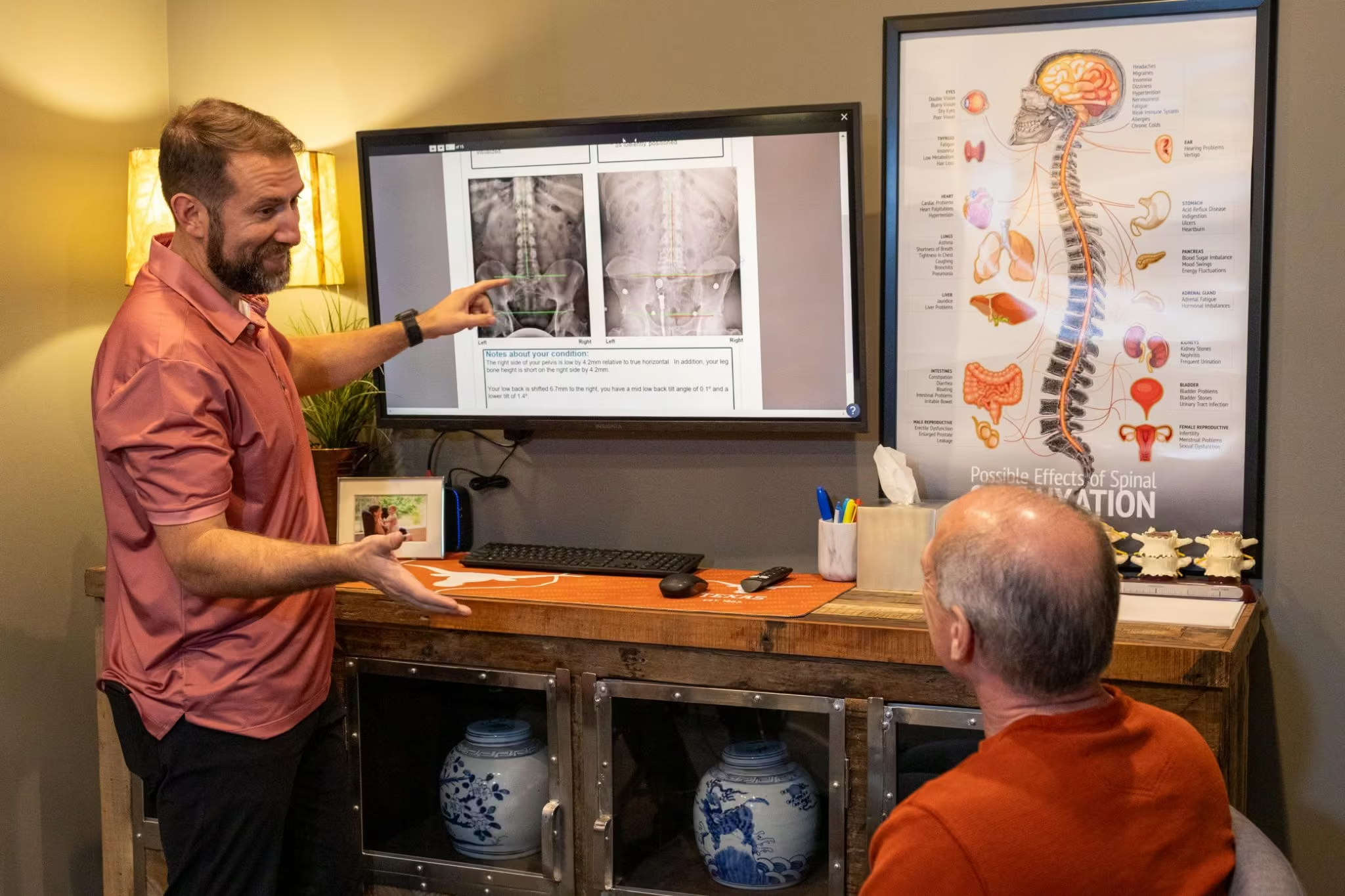
Dr. Ben uses Chiropractic BioPhysics® (CBP) to measure your spine, identify structural problems, and track changes over time. Instead of relying solely on symptoms, we can monitor whether your spine is moving and functioning the way it should.
Takeaways
- Lower back pain often comes from underlying issues like poor posture, repetitive strain, disc problems, or old injuries.
- Dr. Ben uses Chiropractic BioPhysics® (CBP) to measure spinal alignment and track progress over time instead of relying on symptoms alone.
- Treatment may include chiropractic adjustments, rehabilitation exercises, posture correction, and other therapies tailored to your needs.
- Many patients experience meaningful improvements in pain, mobility, and daily function with consistent care.
- The goal is not just temporary relief. It's understanding why the pain keeps coming back and addressing the cause.
Treatment Methods for Lower Back Pain in Fayetteville
Lower back pain can stem from a couple of different places. For one person, it might be years of sitting at a desk. For another, it could be an old injury, a disc issue, poor posture, or repetitive strain from work.
This is why Dr. Ben always starts with a thorough evaluation instead of jumping straight into treatment. The goal is to understand what's contributing to your pain so care can be tailored to your specific needs.
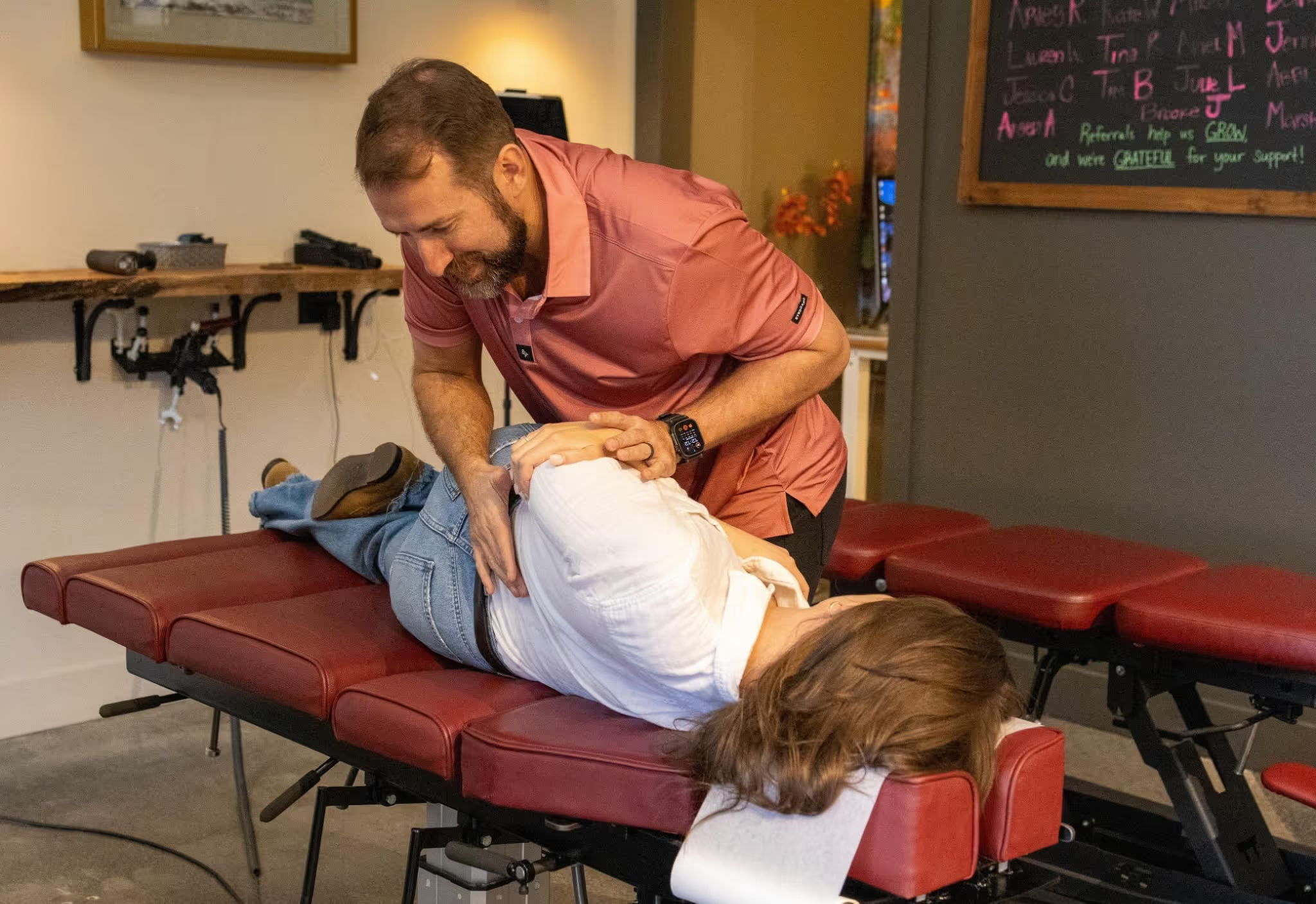
- Spinal Manipulation: Gentle, controlled movements help restore motion in stiff joints that may be contributing to pain and limited mobility.
- Chiropractic Adjustments: Adjustments improve joint movement and help reduce stress on the surrounding muscles, discs, and nerves.
- Therapeutic Exercises: You'll receive exercises designed to strengthen the muscles that support your spine and improve flexibility between visits.
- Physical Rehabilitation: Rehabilitation may include stretching, posture correction, and other techniques that help support recovery and reduce the risk of future flare-ups.
The goal isn't to help you feel better for a day or two. It's to understand what's causing the problem and help you make lasting improvements.
Expected Outcomes from Chiropractic Back Pain Relief
According to the 2016 Clinical Practice Guideline on chiropractic care, patients commonly experience a 30% to 50% reduction in pain intensity within just four to six weeks of treatment.
And while every patient's experience is different, these are some of the most common improvements people report during treatment:
- Less Pain During Daily Activities: Many patients notice that everyday tasks like sitting, driving, walking, or getting out of bed become more comfortable after treatment begins.
- Reduced Stiffness and Tension: As spinal movement improves, patients often experience less tightness in the lower back and fewer painful flare-ups throughout the day.
- Improved Mobility: Bending, twisting, and moving around can become easier when joints and surrounding tissues are functioning more normally.
- A Better Understanding of What's Causing the Pain: Dr. Ben takes time to explain what he's seeing during your evaluation so you understand what's happening with your body and why certain treatments are recommended.
Patient Experiences with a Low Back Pain Chiropractor in Fayetteville, AR
Living with lower back pain can be exhausting. It's not just the discomfort itself. It's wondering why it keeps coming back and whether anything is actually going to help.
If you spend a few minutes reading through Thrive's 612+ Google reviews, you'll notice a pattern. Patients frequently mention how much time Dr. Ben spends listening, explaining what he's seeing, and answering questions. For many people, that's a welcome change after feeling rushed through appointments elsewhere.
Thrive is not a high-volume clinic where patients are moved from room to room as quickly as possible. Dr. Ben takes time to understand how your pain is affecting your daily life, whether that's sitting through work, picking up your kids, exercising, or getting comfortable at the end of the day.
Our patients also appreciate that we don’t just offer adjustments. Treatment may include rehabilitation exercises, posture correction, and decompression therapy, along with practical recommendations to support your recovery between each visit.
Your First Chiropractic Visit for Lower Back Pain in Fayetteville
Walking into a chiropractic office for the first time can feel a little intimidating, especially if you've never been treated before or you're not sure what's causing your back pain.
At Thrive, your first visit is designed to answer two questions: What's causing the problem, and what can be done about it?
Your appointment with Dr. Ben typically lasts between 60 and 90 minutes, giving you plenty of time to discuss your symptoms, ask questions, and undergo a thorough evaluation.
- Posture and Movement Assessment: Dr. Ben will evaluate how you stand, move, and carry yourself to identify patterns that may be contributing to your pain.
- X-rays if Needed: If additional information is needed, X-rays may be recommended to get a clearer picture of what's happening with your spine.
- Treatment Discussion: Once the evaluation is complete, Dr. Ben will explain his findings and discuss treatment options, which may include chiropractic adjustments, spinal decompression, rehabilitation exercises, or a combination of therapies.
- Personalized Recommendations: You'll receive recommendations based on your specific condition, goals, and examination findings.
- Cost and Care Plan Review: Before moving forward, you'll have a chance to discuss treatment recommendations, visit frequency, and costs so you can make an informed decision.
Chiropractic Techniques and How They Work
When a joint in your spine isn't moving the way it should, your body often compensates. Muscles tighten, movement becomes restricted, and everyday activities can become uncomfortable. The goal of chiropractic care is to restore normal movement and reduce the stress being placed on the surrounding joints, muscles, discs, and nerves.
- Chiropractic Adjustments: Adjustments help restore movement to stiff or restricted joints. When joints move better, many patients notice less pain, less tension, and improved mobility.
- Spinal Decompression Therapy: Think of a compressed disc like a cushion that's been squeezed for too long. Spinal decompression gently creates space within the spine, helping reduce pressure on discs and nearby nerves.
- Physical Rehabilitation Exercises: Exercises are used to strengthen the muscles that support your spine, so the improvements made during treatment are easier to maintain.
- Posture Correction Exercises: Small changes in posture can reduce unnecessary stress on your spine. You'll learn practical ways to sit, stand, and move that support long-term spinal health.
How Chiropractic Care Supports Natural Pain Relief and Wellness
For some people, lower back pain becomes part of their routine. A heating pad before bed. Stretching first thing in the morning. Pain medication before a long drive or a busy day. Those things may provide temporary relief, but they don't always address what's contributing to the problem in the first place.
.avif)
At Thrive Wellness Center, treatment focuses on helping your body move and function better. That starts with understanding why the pain developed, whether it's related to posture, repetitive strain, a previous injury, or changes in the way your body has adapted over time.
Once the underlying issues are identified, care may include chiropractic adjustments, spinal decompression, rehabilitation exercises, and practical recommendations designed to support long-term improvement.
The goal isn't simply to help you get through the day with less discomfort. It's to help you understand what's contributing to the pain and what can be done to improve it.
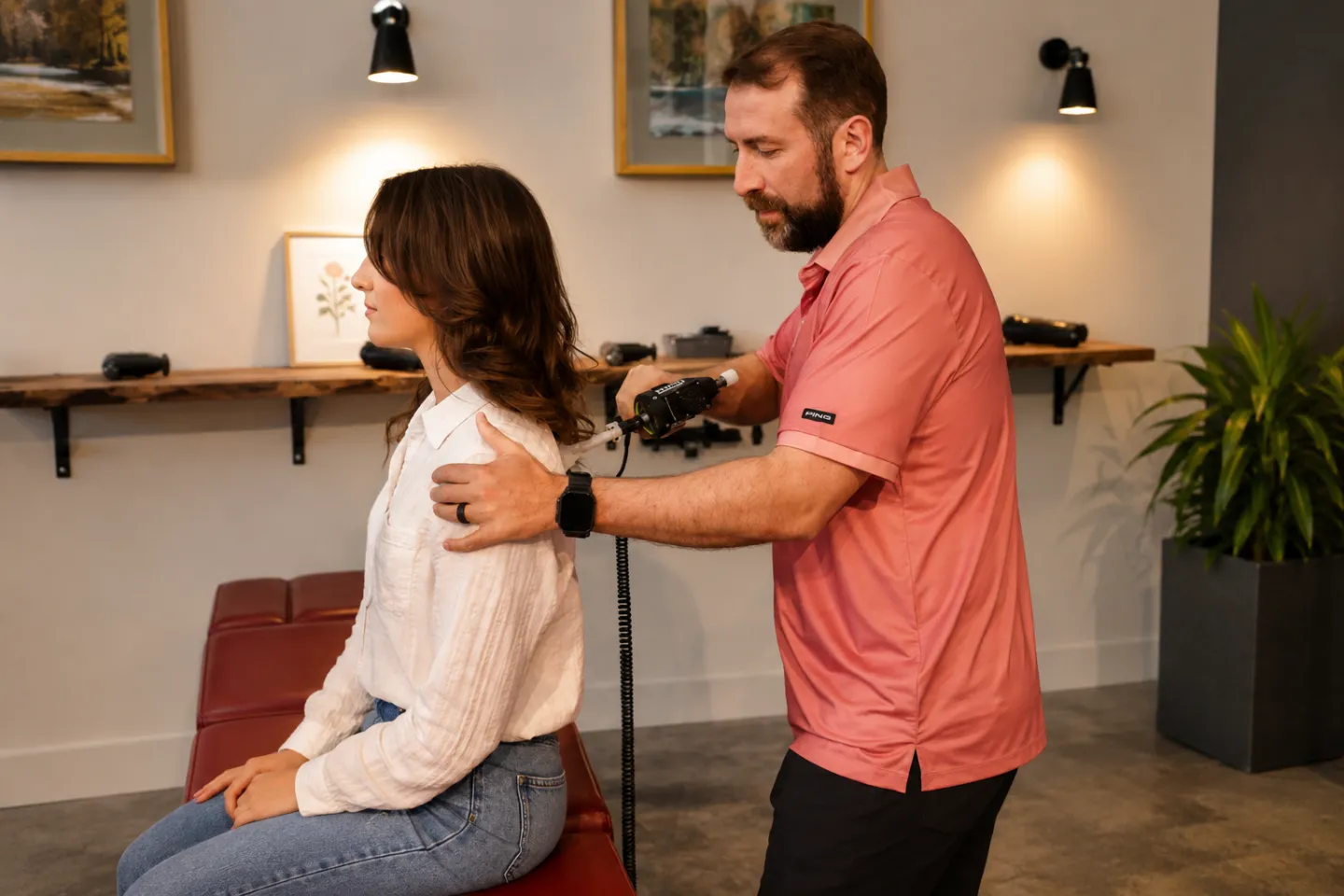
Dr. Ben using an adjustment instrument on a patient’s lower back during chiropractic treatment designed to improve mobility, reduce pain, and support long-term spinal health.
Scheduling and Preparing for Your Chiropractic Consultation at Thrive Wellness Center
Scheduling your consultation at Thrive Wellness Center is simple and preparing ahead of time can help you get more out of your first visit.
If you have previous imaging, medical records or information about past injuries and treatments, bring those with you. It is also helpful to write down any questions beforehand so nothing gets overlooked during your appointment.
Wear comfortable clothing (if possible) since posture and movement assessments are often part of the examination.
And most importantly, come ready to talk honestly about what you have been experiencing. The more clearly Dr. Ben and the Thrive team understand your symptoms and goals, the more personalized your care can be.
Booking a Free Consultation Near Fayetteville, AR
If you've been dealing with lower back pain and want to understand what's causing it, a free consultation is a good place to start.
You'll have the opportunity to discuss your symptoms, ask questions, and learn more about the treatment options available at Thrive Wellness Center. From there, Dr. Ben can help determine whether chiropractic care may be a good fit for your situation.
Frequently Asked Questions
Do I need a referral from my doctor to see a chiropractor?
No. In most cases, you can schedule directly with Thrive Wellness Center without a referral from your primary care doctor.
Does insurance cover chiropractic visits?
Many insurance plans include chiropractic benefits, but coverage varies by provider and policy. Thrive Wellness Center works with several insurance providers, including BCBS, Aetna, Ambetter, QualChoice, and Medicare. If you're unsure what your plan covers, the Thrive team can review your benefits and explain any expected costs to you before treatment begins.
What is the difference between CBP and regular chiropractic care?
CBP (Chiropractic BioPhysics) focuses on both measuring and improving the structure of your spine over time. While traditional chiropractic care often focuses on restoring joint movement and reducing pain, CBP uses detailed assessments and progress tracking to help identify structural issues that may be contributing to your symptoms.
Can I get adjusted if I have had back surgery?
In many cases, yes, but every situation is different. Dr. Ben will review your medical history, evaluate your condition, and determine what treatment options are appropriate for you.
How long does it take to see results from chiropractic care?
There's no exact timeline, but some people notice changes within the first few weeks of care, while others need more time, depending on how long they've been dealing with the problem and what's contributing to it. During your evaluation, Dr. Ben can give you a better idea of what to expect based on your specific condition.
How often should I visit a chiropractor for lower back pain?
The right schedule depends on your condition and treatment goals. Our patients start with more frequent visits early on, so progress can be monitored closely, then gradually reduce their visit frequency as they improve. Dr. Ben will recommend a schedule based on your evaluation and how your body responds to the treatment.
Ready to Find Out What's Causing Your Lower Back Pain?
You don't have to keep guessing why your back hurts or hope the problem eventually goes away on its own.
If lower back pain is affecting your work, sleep, exercise routine, or everyday activities, the first step is understanding what's causing it. At Thrive Wellness Center, Dr. Ben takes the time to evaluate your spine, answer your questions, and help you understand what may be contributing to the pain.
Schedule a free consultation to learn more about your options and whether chiropractic care may be right for you!

Dr. Ben Ozanne
Chiropractor and Owner of Thrive Wellness Center
Latest from the Blog
Why Your Chronic Lower Back Pain Keeps Coming Back
Herniated Disc Lower Back Pain: Symptoms and Treatment
A herniated disc in your lower back can send pain, tingling, or weakness all the way into your leg and foot. Here is what the symptoms feel like, what helps in the first few days, and the warning signs that mean you should stop managing it at home.
Muscle Strain vs. Something Worse: Understanding Your Lower Back Pain
A strain usually stays put and eases day by day. Pain that travels into your leg, or comes with numbness, tingling, or weakness, is a different signal. Here is how to tell them apart and when to stop watching and get evaluated.