How Do Traction Tables Work?
March 19, 2026
What Is a Traction Table?
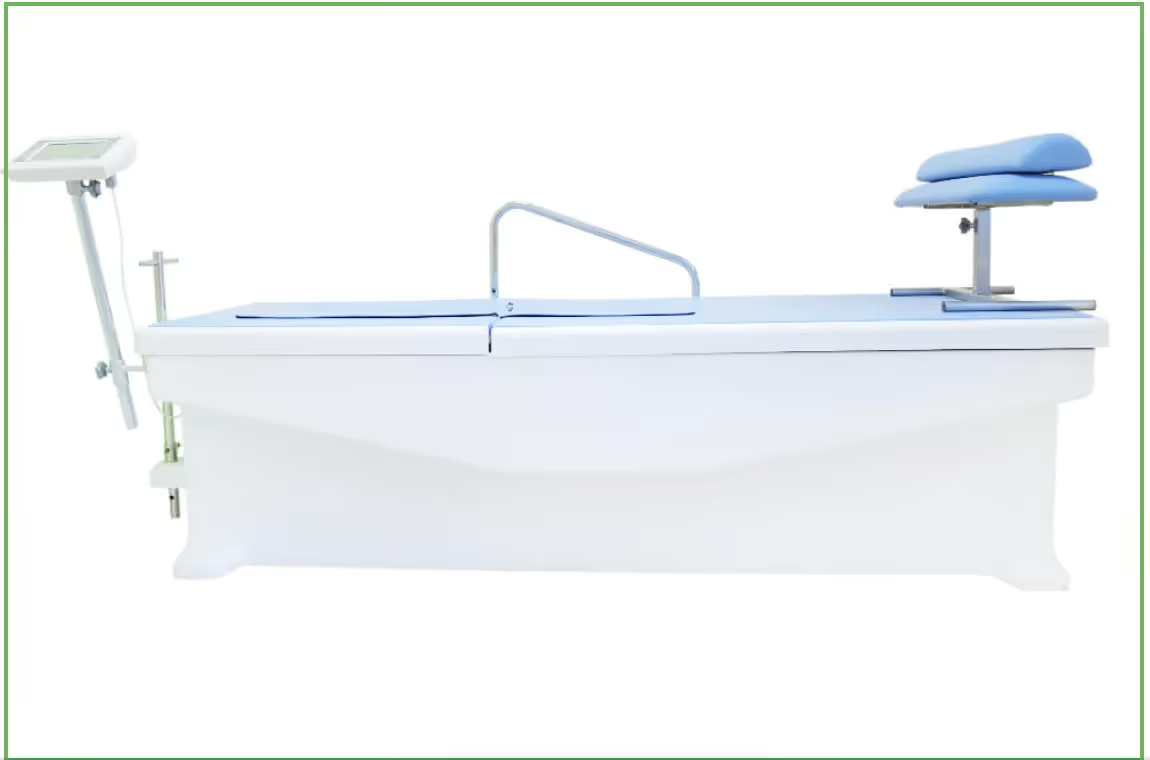
A traction table is a mechanical form of spinal traction at our Fayetteville practice. The table, combined with weights or straps, can stretch the spine to realign or relieve pain from excess pressure on the spinal discs.
You will lay face down, completely straight on the table which ensures there's no pressure on your spine. Additional weights can be placed at the end of the table for traction to assist with stretching the spine. The patient lays in this position for about 20-30 minutes a day and will slowly find an increase in flexibility, mobility, and pain relief.
What Issues Can Be Treated?
The traction table targets the spinal discs but also offers relief in other areas of the body, like sciatica, carpal tunnel, knee pain, and general back pain. People with conditions like slipped or herniated discs, bone spurs, degenerative disc disease, and pinched nerves would see great relief from spinal traction.
Benefits of Traction Tables
A traction table is a great treatment for patients of all shapes, weights, and sizes. It helps improve flexibility by increasing the spine's range of motion. It is also highly customizable — we can adjust the intensity to fit each patient's comfort level and needs.
Traction therapy is a viable alternative to more invasive procedures like surgery to relieve debilitating pain, not to mention it reduces inflammation and improves blood circulation.
Get Pain Relief Today
If you have back pain, contact us at Thrive Wellness Center in Fayetteville for a consultation so we can assess your symptoms and determine if you're a good candidate for spinal traction.

Dr. Ben Ozanne
Chiropractor and Owner of Thrive Wellness Center
Latest from the Blog
Inside a CBP Treatment Plan: What to Expect From Start to Finish
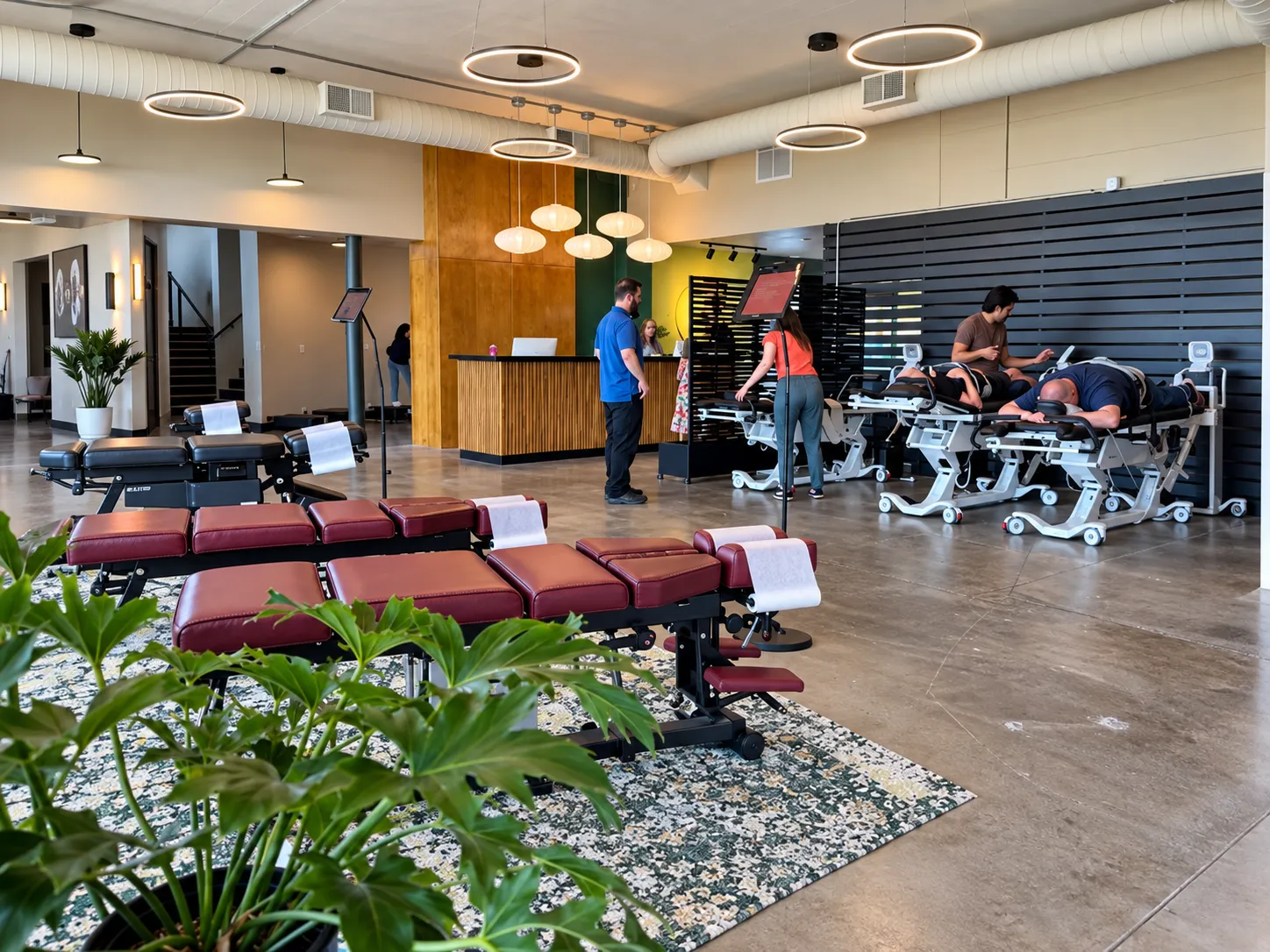
Wondering what a CBP treatment plan actually involves? See what happens from your first exam and X-rays through adjustments, mirror image traction, and follow-up imaging at Thrive Wellness Center in Fayetteville, AR.
How CBP Postural Correction Techniques Work (and Why They Matter)
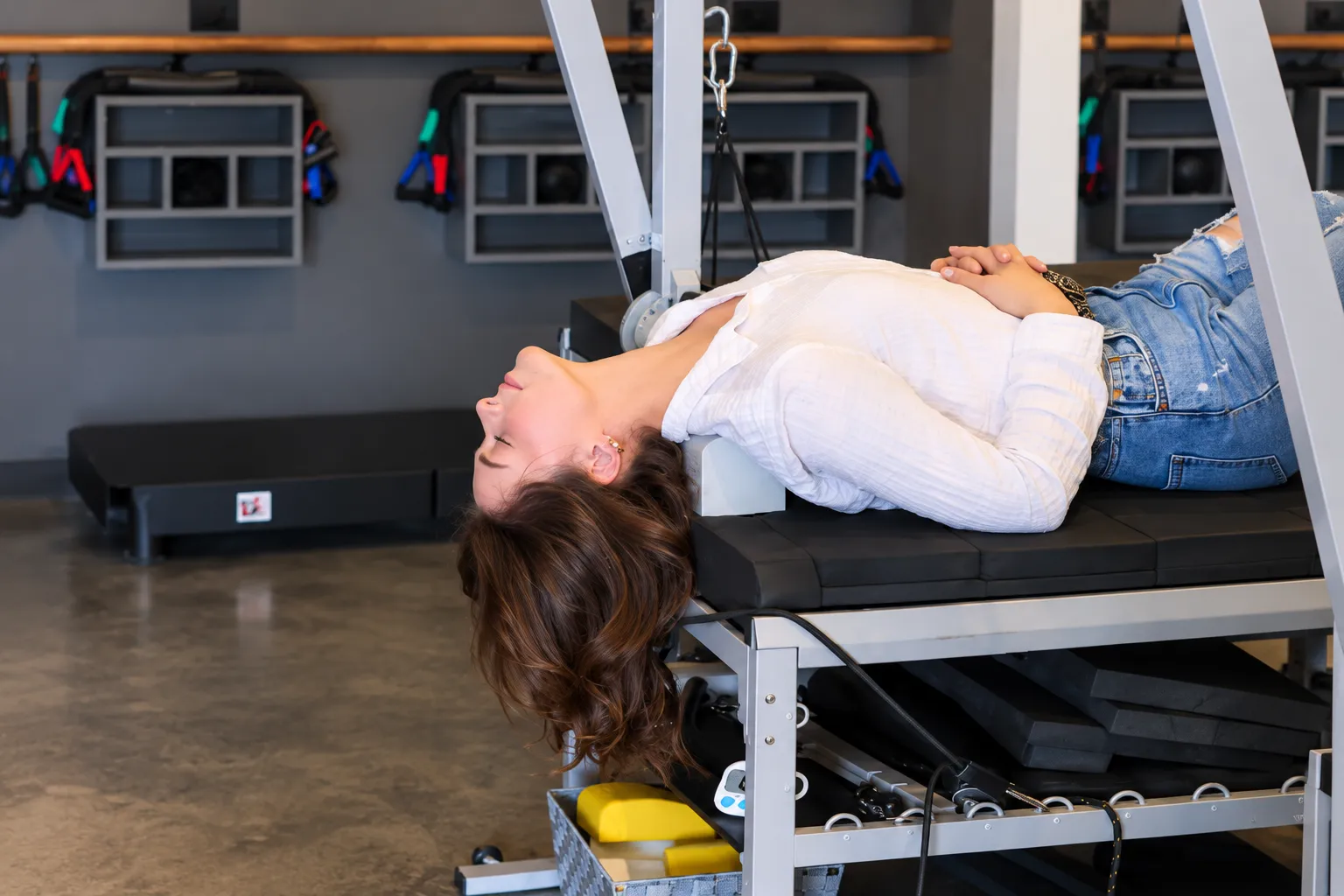
Temporary relief from an adjustment doesn't always mean the underlying posture problem is corrected. Here's how CBP postural correction techniques work, what a first visit looks like, and why the approach is built to be measured over time.
Structural Correction vs. Traditional Adjustments: What's the Difference?
Traditional adjustments can restore movement and ease pain. Structural correction adds measurable spinal and postural findings you can track over time. Here is how the two approaches differ, and what progress looks like when it is measured instead of guessed at.