Neck Pain: What's Causing It and How to Fix It
October 21, 2026
You finish a day at your desk, turn your head to check something beside you, and realize your neck feels stiff and uncomfortable. Maybe it eases overnight, only to return the next afternoon. When neck pain keeps showing up, it's worth looking at what's contributing to it rather than assuming you simply slept wrong or spent too long on your phone.
From muscle strain and irritated joints to problems involving the cervical spine, neck pain can have several causes. So how do you tell what's behind yours, and when could structural correction help?
Key Takeaways
- Prolonged screen use, awkward sleeping positions, and sustained muscle tension can contribute to neck pain. Identifying which factors apply to you helps guide the next steps in treatment.
- An assessment at Thrive Wellness Center examines neck movement, muscle strength, sensation, reflexes, and spinal alignment where appropriate to help determine what may be causing your symptoms.
- Dr. Ben Ozanne uses Chiropractic BioPhysics® (CBP®) to guide corrective care through spinal alignment measurements and specific procedures intended to address certain spinal curves.
- Research discussed in this article found an average improvement of approximately 13-14 degrees in cervical curvature among participants receiving CBP® cervical traction and spinal manipulation. The study was small and nonrandomized, so these results may not reflect what every patient experiences.
- Neck pain accompanied by arm weakness, tingling, or numbness may require further investigation. New weakness, difficulty walking, or loss of bladder or bowel control requires urgent medical attention.
What Causes Neck Pain in Daily Life?
Neck pain can build up during an ordinary day at work. You spend hours looking at a laptop, lean over your phone between tasks, and barely move your head until you finally stand up and notice how stiff your neck feels. The longer you stay in one position, the less opportunity your muscles have to recover from holding your head up.
A 2023 review of 46 studies found an association between computer and mobile phone use and neck pain. Computer use was associated with 30% higher odds of neck pain, while mobile phone use was associated with more than twice the odds. These figures describe an association, not proof that screen use caused the pain. They also don't mean that everyone who spends long hours on a device will develop neck problems.
The position of your head can also affect how much work your neck muscles do. Your head weighs roughly 10 to 12 pounds when held upright. Looking down at a phone or leaning toward a monitor changes how that weight is distributed, increasing the demand on the muscles supporting your head and neck. Holding that position for long periods can contribute to fatigue and discomfort.
Your setup and daily habits can add to the strain. A monitor positioned too low may encourage you to lean forward, while a pillow that forces your head into an uncomfortable angle can leave your neck stiff in the morning. Sleeping on your stomach also keeps your head turned to one side for an extended period. These habits don't guarantee neck pain, but they may contribute when combined with prolonged screen use, repetitive movements, or limited opportunities to change position.
Can Stress Really Cause Neck Pain?
Have you noticed your shoulders creeping toward your ears when you're under pressure? You might also clench your jaw or catch yourself holding your breath while working through a deadline. These reactions can keep the muscles around your neck and shoulders tense, adding to discomfort that's already developing from prolonged desk work or other physical demands.
Stress can also affect how you experience pain. Poor sleep, ongoing tension, and difficulty relaxing may make existing neck discomfort harder to manage. That doesn't mean the pain is imaginary or that stress is necessarily its main cause. Physical demands and psychological stress can contribute together, so looking at both can provide a clearer picture of what may be aggravating your symptoms.
Small changes to your routine can help reduce some of these demands. Raise your screen closer to eye level, avoid holding your phone between your ear and shoulder, and change position regularly rather than sitting still for hours. The CDC's National Institute for Occupational Safety and Health found that adding five-minute breaks each hour to conventional breaks reduced musculoskeletal discomfort and eyestrain during computer work.
These adjustments can help manage everyday strain, but persistent or worsening neck pain may need further assessment to establish whether another problem is contributing.
How Is Neck Pain Diagnosed and Treated?
You turn your head and feel a sharp pull. Or perhaps the pain starts in your neck and travels down your arm, leaving your fingers tingling. These symptoms can point to different problems, which is why a neck examination needs to look at more than the painful spot.
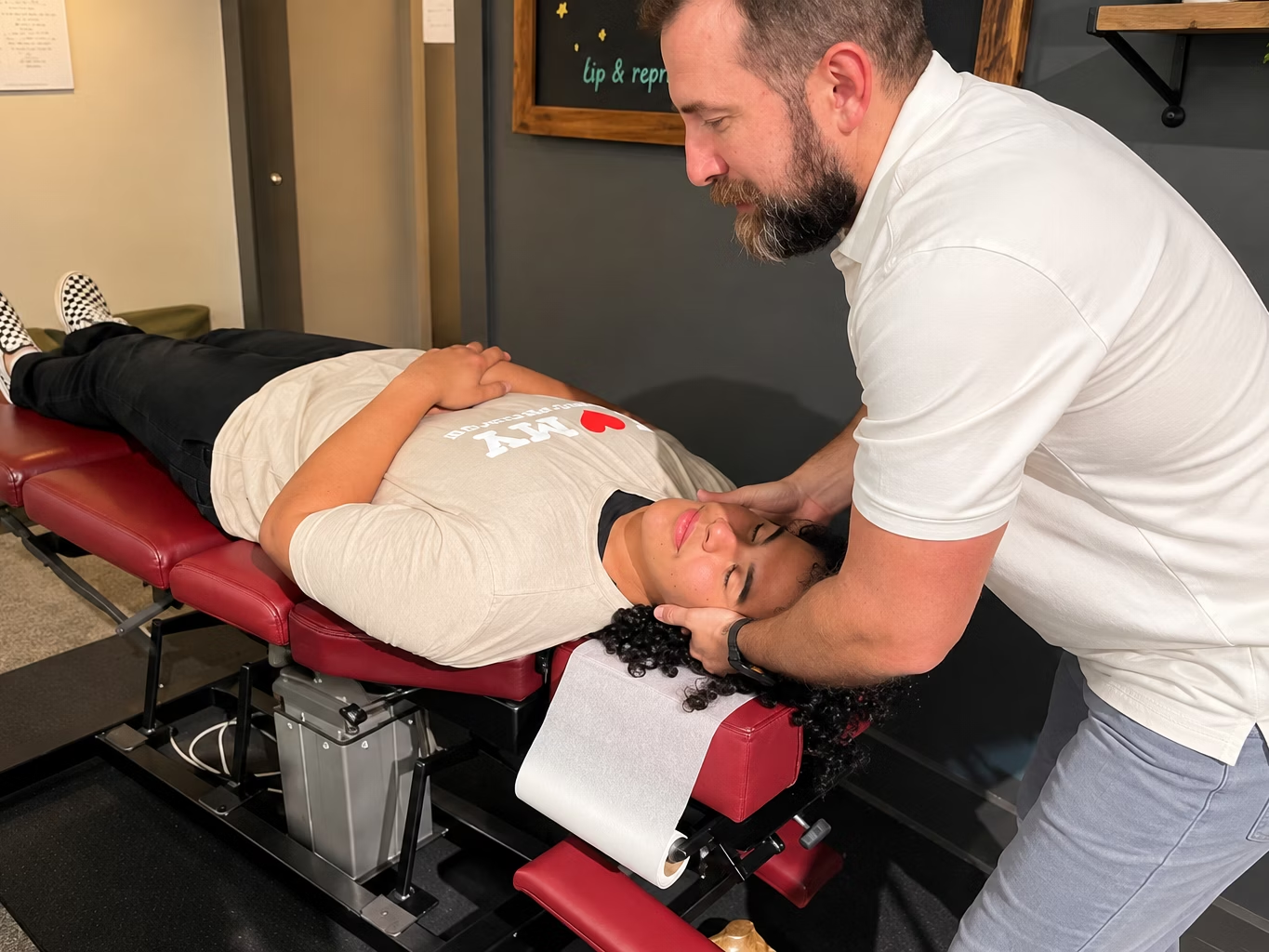
A clinician may check how far you can turn your head, test the strength of your arms and hands, and compare sensation and reflexes on both sides. Pain that stays around the neck may involve muscles or joints, while pain travelling into an arm alongside numbness or weakness raises concern about nerve involvement. New or worsening weakness, difficulty walking, loss of coordination, or new bladder or bowel control problems need urgent medical assessment because they can indicate pressure on the spinal cord or other serious conditions.
What Happens During a Neck Pain Evaluation?
The examination helps determine whether the symptoms fit a straightforward muscle or joint problem or whether further investigation is needed. Your history matters here: pain after a car accident, for example, is assessed differently from stiffness that has developed gradually over several months.
X-rays and MRI scans also answer different questions. An X-ray shows the bones and the curves of the cervical spine, which can be useful when assessing spinal alignment. MRI provides more detail about discs, nerves, and the spinal cord, making it useful when certain neurological problems are suspected. Neither scan is necessary for every case of neck pain, and an image finding does not automatically explain the symptoms.
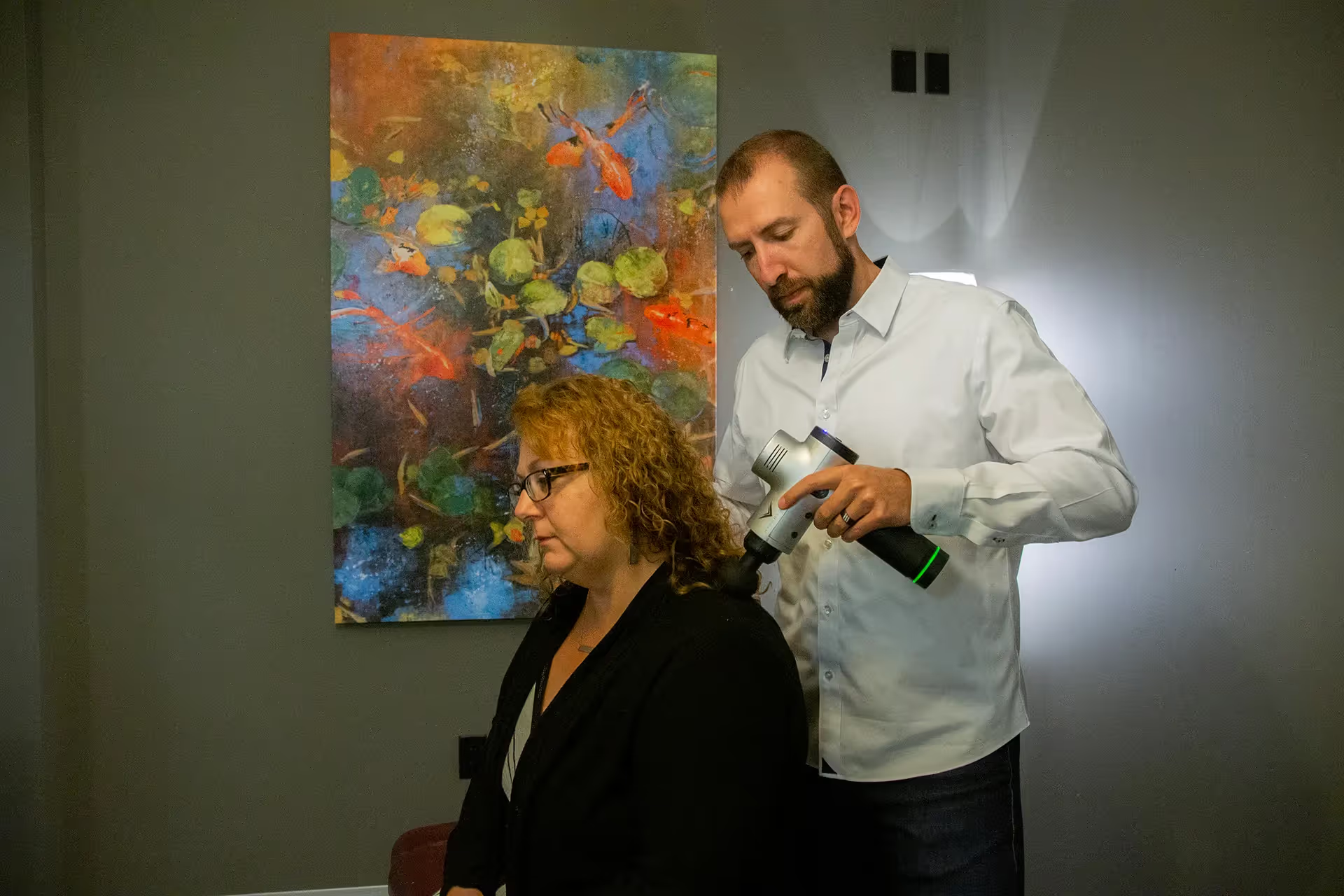
At Thrive Wellness Center in Fayetteville, spinal alignment may be assessed when considering Chiropractic BioPhysics® (CBP®). The measurements can help identify alignment findings that may be relevant to corrective care, but they need to be considered alongside the patient's symptoms and physical examination.
Which Treatments May Help Neck Pain?
The treatment needs to fit the problem. Someone with a muscle strain may benefit from appropriate movement and targeted exercises. Someone with pain, tingling, and weakness travelling into an arm may need further investigation before a treatment plan is chosen. Treating both situations in exactly the same way would overlook important differences.
CBP® takes a specific approach to spinal alignment, using measurements and corrective procedures intended to change certain spinal curves. In a small, nonrandomized controlled study, researchers followed people receiving CBP® cervical traction combined with spinal manipulation. After an average of 38 visits over 14.6 weeks, the treatment group showed an average improvement of about 13 to 14 degrees in a measure of cervical curvature, alongside a reduction in reported pain. Some improvements in alignment were maintained in the participants followed for a further 14 months. However, the study was small and did not randomly assign participants to treatment, so it cannot establish that CBP® will produce the same results for everyone.
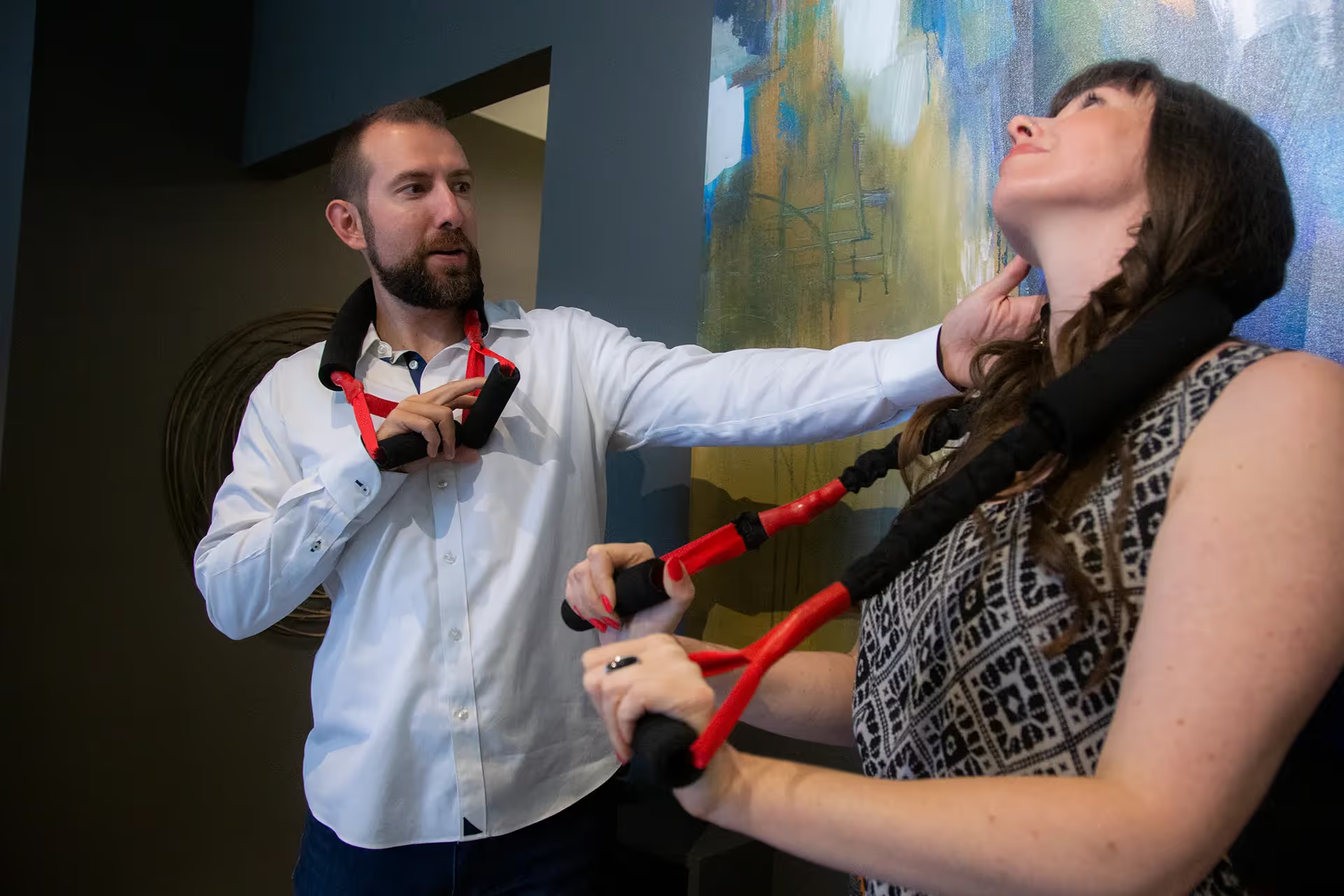
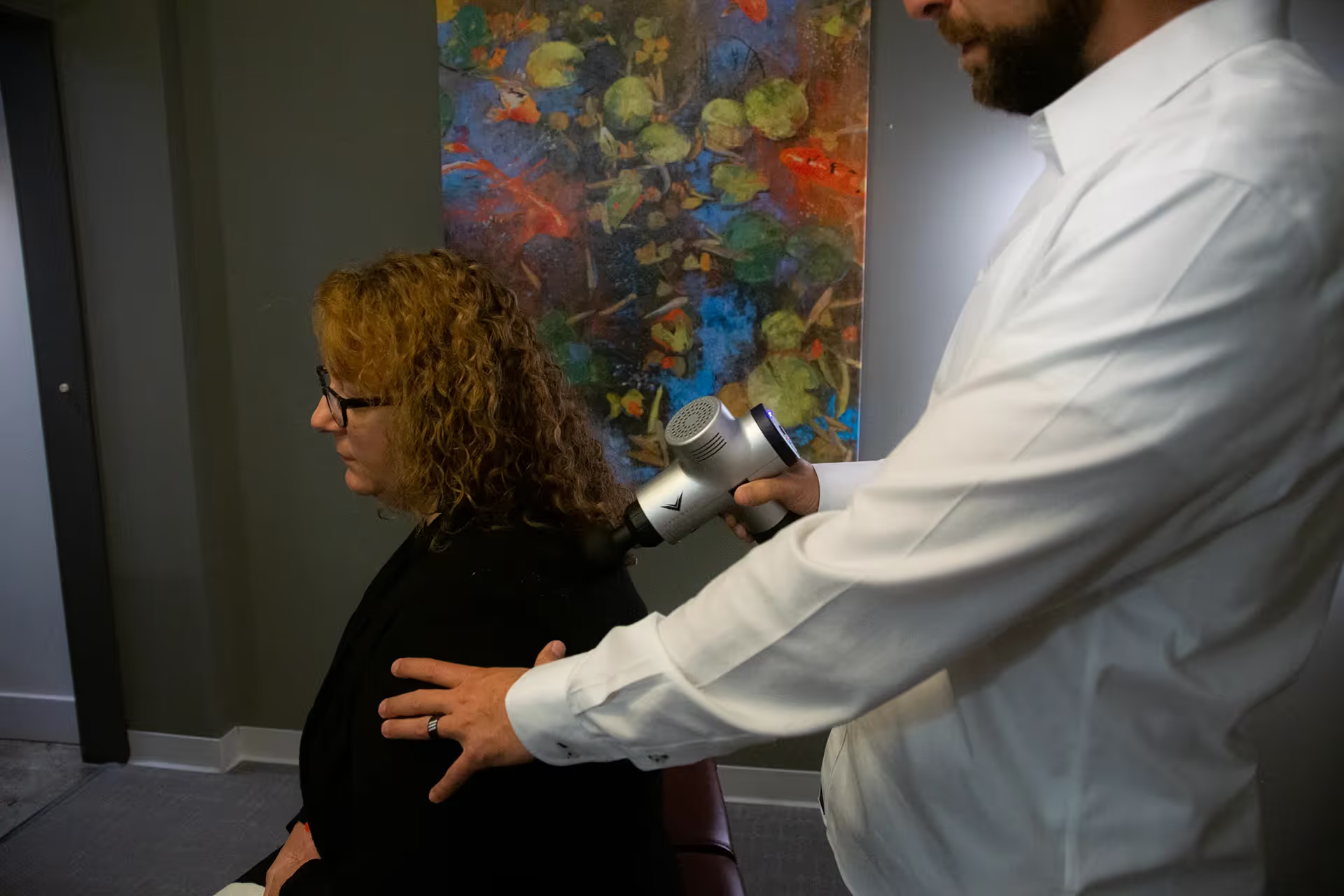
At Thrive Wellness Center, Dr. Ben Ozanne offers CBP® as part of the clinic's corrective care services. Whether it is suitable depends on the patient's assessment findings. Exercises and changes to everyday activities may also form part of care, depending on what is contributing to the pain.
People experiencing neck pain in Fayetteville and Northwest Arkansas can learn more about Thrive's neck pain treatment services.
When Should You See a Chiropractor for Neck Pain?
A stiff neck after sleeping in an awkward position may settle within a few days. But when the pain keeps coming back, limits how far you can turn your head, or starts interfering with work and sleep, it's worth getting it checked, especially when it isn't improving.
The symptoms can also tell you more about what's going on. Neck stiffness that gradually eases is different from pain that starts travelling into your shoulder or arm. When that pain comes with tingling, numbness, or weakness, it could indicate irritation of a nerve in the cervical spine.
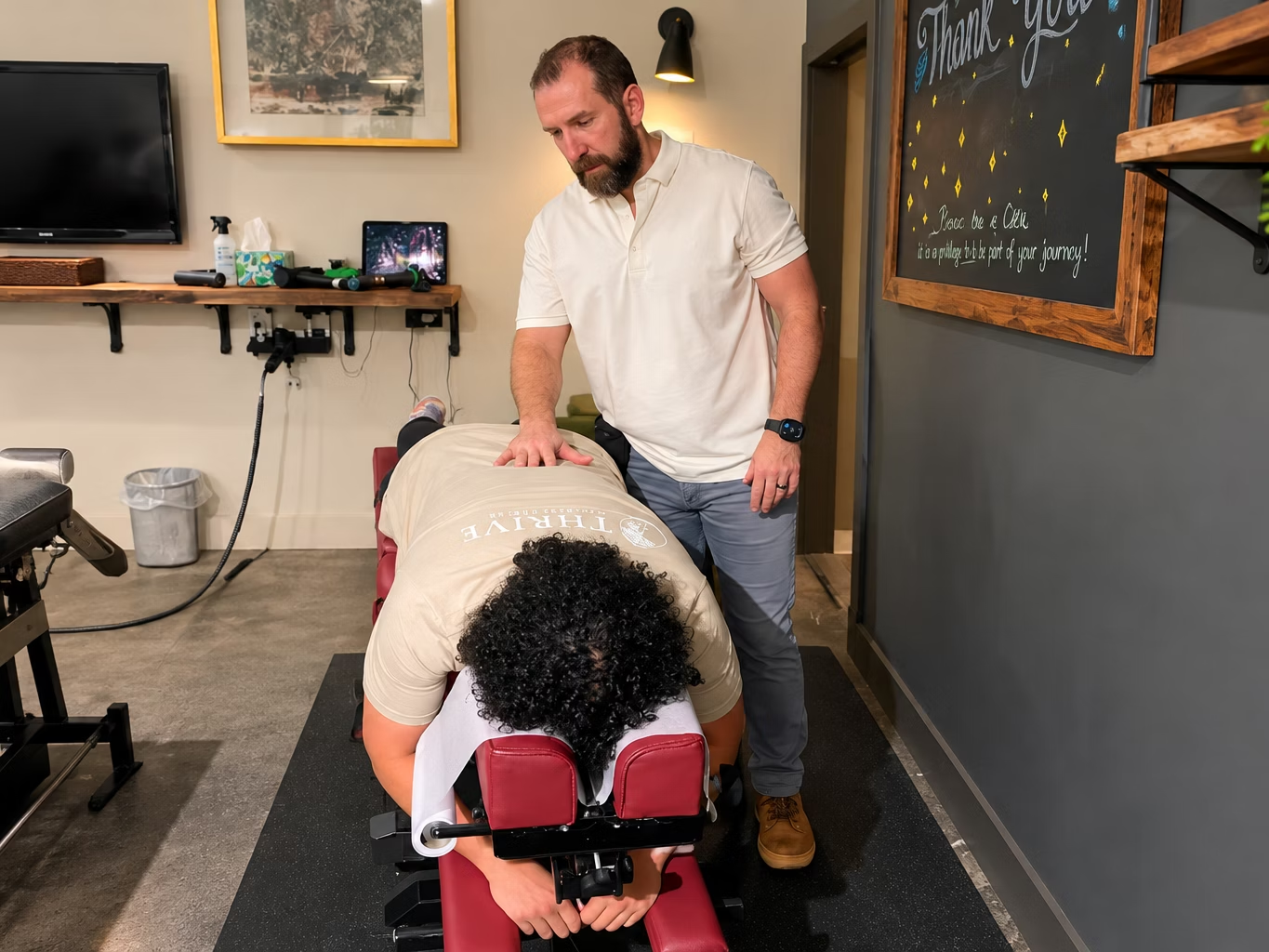
A chiropractor can assess certain muscle, joint, and movement-related problems and help determine whether chiropractic care is appropriate. At Thrive Wellness Center in Fayetteville, Dr. Ben Ozanne offers corrective chiropractic care, including Chiropractic BioPhysics® (CBP®), for patients whose clinical findings may support this approach.
Neck Pain Symptoms That Need Medical Attention
Not every case of neck pain requires imaging or specialist care, but some symptoms need prompt medical attention.
- Pain, tingling, or numbness travelling down an arm: This can occur when a nerve in the neck is irritated or compressed.
- New or worsening weakness in an arm or hand: Difficulty gripping objects, repeatedly dropping things, or struggling to lift an arm needs prompt medical assessment.
- Changes in balance, walking, or coordination: These can indicate pressure on the spinal cord and require urgent evaluation.
- New loss of bladder or bowel control: This requires emergency medical attention, particularly when accompanied by neurological symptoms.
- Neck pain after a significant accident or injury: A fracture or other serious injury needs to be ruled out before chiropractic treatment is considered.
A fever alongside a stiff neck, a severe headache, or neck pain accompanied by unexplained weight loss or a history of cancer also warrants prompt medical evaluation. These symptoms can point to conditions that need investigation beyond routine chiropractic care.
Is Corrective Chiropractic Care Right for Your Neck Pain?
That depends on what's contributing to the pain (we hate to be so vague…). A muscle strain, a problem involving a spinal disc, and a condition affecting the spinal cord are different problems, and they shouldn't all be approached in the same way.
Chiropractic BioPhysics® (CBP®) focuses on measuring spinal alignment and using specific corrective procedures to address certain findings. At Thrive Wellness Center, Dr. Ben Ozanne can assess whether this approach may be suitable for your situation. When symptoms suggest significant nerve involvement or another condition requiring medical investigation, that needs to be addressed before deciding on corrective care.
You don't need to work around neck pain indefinitely or guess at what's causing it. An appropriate assessment can help establish what needs attention and which treatment options make sense for your symptoms.
FAQ
What causes neck pain in daily life?
Long periods looking down at a phone or leaning toward a computer can leave the neck muscles working under sustained load. This is what we call tech neck. Repetitive movements, an awkward sleeping position, or holding tension in the shoulders can contribute too. These factors may aggravate neck pain, but they don't explain every case.
How is neck pain diagnosed?
A clinician reviews your symptoms, medical history, and any previous injuries, then checks neck movement, muscle strength, sensation, and reflexes where appropriate. X-rays may help assess spinal alignment when indicated, while an MRI can provide more detail about discs, nerves, and the spinal cord. The type of investigation depends on the symptoms and examination findings.
What makes Chiropractic BioPhysics® different from a standard adjustment?
Chiropractic BioPhysics® (CBP®) uses measurements of spinal alignment to guide specific corrective procedures. Rather than focusing solely on joint movement or immediate symptom relief, CBP® aims to change particular spinal alignment findings over time. Whether this approach is suitable depends on the patient's assessment.
How many visits does it usually take to correct the underlying cause?
There isn't one standard number of visits for everyone. The recommended schedule depends on the assessment findings, the treatment being considered, and how symptoms and function change during care. Some CBP® research has examined treatment programs lasting around 10 to 15 weeks, but those study protocols should not be taken as a prediction of how long an individual patient will need.
Can tech neck be reversed with posture changes alone?
Changing how you use your phone or position your screen can reduce the time you spend leaning forward, but posture changes alone may not resolve persistent neck pain. Exercise, movement breaks, and other treatment options may also help, depending on what's contributing to the symptoms. A forward head position does not automatically mean the cervical spine is structurally damaged.
Is it normal for neck pain to come with headaches or shoulder tightness?
Neck problems can contribute to headaches that begin near the base of the skull, as well as tension or discomfort across the shoulders. However, headaches and shoulder pain can have other causes, so they shouldn't automatically be attributed to spinal alignment. A new, severe headache or a headache accompanied by fever, neurological symptoms, or a stiff neck needs prompt medical assessment.
Don't Ignore What Your Neck Is Telling You
Neck pain that keeps returning deserves a closer look, especially when it starts limiting how you move or sends pain, tingling, or numbness into your arm. You don’t have to live like this, and those symptoms can have different causes. Knowing whether you're dealing with muscle strain, joint irritation, or nerve involvement changes how the problem should be approached. But leave it all to Dr. Ben Ozanne at Thrive Wellness Center.
We offer Chiropractic BioPhysics® (CBP®) using spinal alignment measurements to guide corrective care when appropriate.

Dr. Ben Ozanne
Chiropractor and Owner of Thrive Chiropractic & Wellness Center
Latest from the Blog
Why does my neck hurt?
Relieving Migraine Headaches